A solar mounting bracket doesn’t get much attention until it fails. When a ground-mount array starts sagging after two monsoon seasons because the racking couldn’t handle the structural load, that bracket becomes the most important component in the entire installation. The global solar photovoltaic (PV) mounting systems market was valued at over $16 billion in 2025, with Asia-Pacific accounting for more than half of that figure. China sits at the center—not just for panels, but for the structural hardware that holds them up.
This guide covers the top 10 solar and clean energy mounting bracket manufacturers in China, evaluated on what actually matters for procurement: process range, material capability, structural certifications, and custom fabrication flexibility. Whether you’re sourcing custom sheet metal fabrication or precision CNC-machined mounting components for solar, wind turbine, or electric vehicle (EV) charging infrastructure, this list gives you a qualified shortlist to work from.
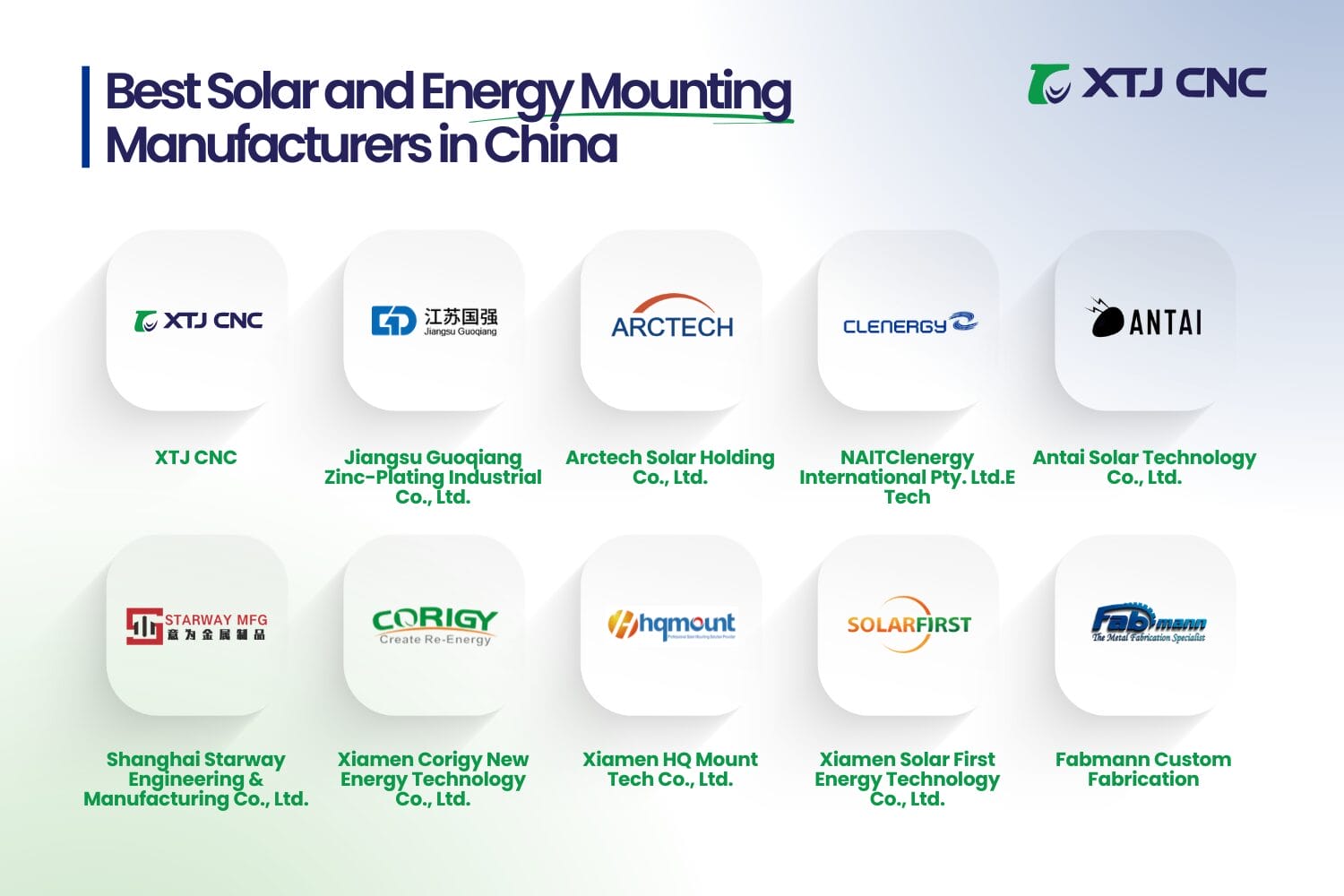
Comparison Table: Top 10 Solar & Energy Bracket Manufacturers in China
The table below provides a capability snapshot across all 10 manufacturers. Lead times reflect standard custom orders—prototype and expedited timelines will differ.
| Manufacturer | Location | Lead Time | Key Materials | Certifications | Energy Sectors |
|---|---|---|---|---|---|
| XTJ CNC | Dongguan, Guangdong | From 5 days (prototype) | Al, SS, carbon steel, titanium | ISO 9001, IATF 16949 | Solar, EV charging, wind, industrial |
| Jiangsu Guoqiang | Jiangyin, Jiangsu | 3–5 weeks | Galvanized steel, ZAM | ISO 9001, ISO 14001 | Solar (ground, tracker) |
| Arctech Solar | Kunshan, Jiangsu | 4–6 weeks | Galvanized steel, aluminum | ISO 9001, TUV | Solar (tracker, fixed tilt) |
| Clenergy | Xiamen, Fujian | 3–5 weeks | Aluminum, galvanized steel | ISO 9001, TUV, AS/NZS | Solar (rooftop, ground) |
| Antai Solar Technology | Xiamen, Fujian | 2–4 weeks | Aluminum, stainless steel | ISO 9001, CE, TUV | Solar (rooftop, BIPV, agrivoltaic) |
| Shanghai Starway | Shanghai | 2–4 weeks | Carbon steel, stainless, aluminum | ISO 9001, IATF 16949 | Solar, EV charging, industrial |
| Corigy Solar | Xiamen, Fujian | 2–4 weeks | Aluminum, galvanized steel | ISO 9001, CE, SGS | Solar (ground, rooftop, carport) |
| HQ Mount | Xiamen, Fujian | 2–3 weeks | Aluminum, ZAM steel | ISO 9001, CE | Solar (ground, rooftop) |
| Xiamen Solar First | Xiamen, Fujian | 3–5 weeks | Aluminum, galvanized steel | ISO 9001, TUV, SGS | Solar (tracker, floating, carport) |
| Fabmann | Shandong | 2–4 weeks | Carbon steel, stainless, aluminum | ISO 9001 | Solar, wind turbine, EV charging |
Top 10 Solar and Energy Mounting Manufacturers in China
1. XTJ CNC
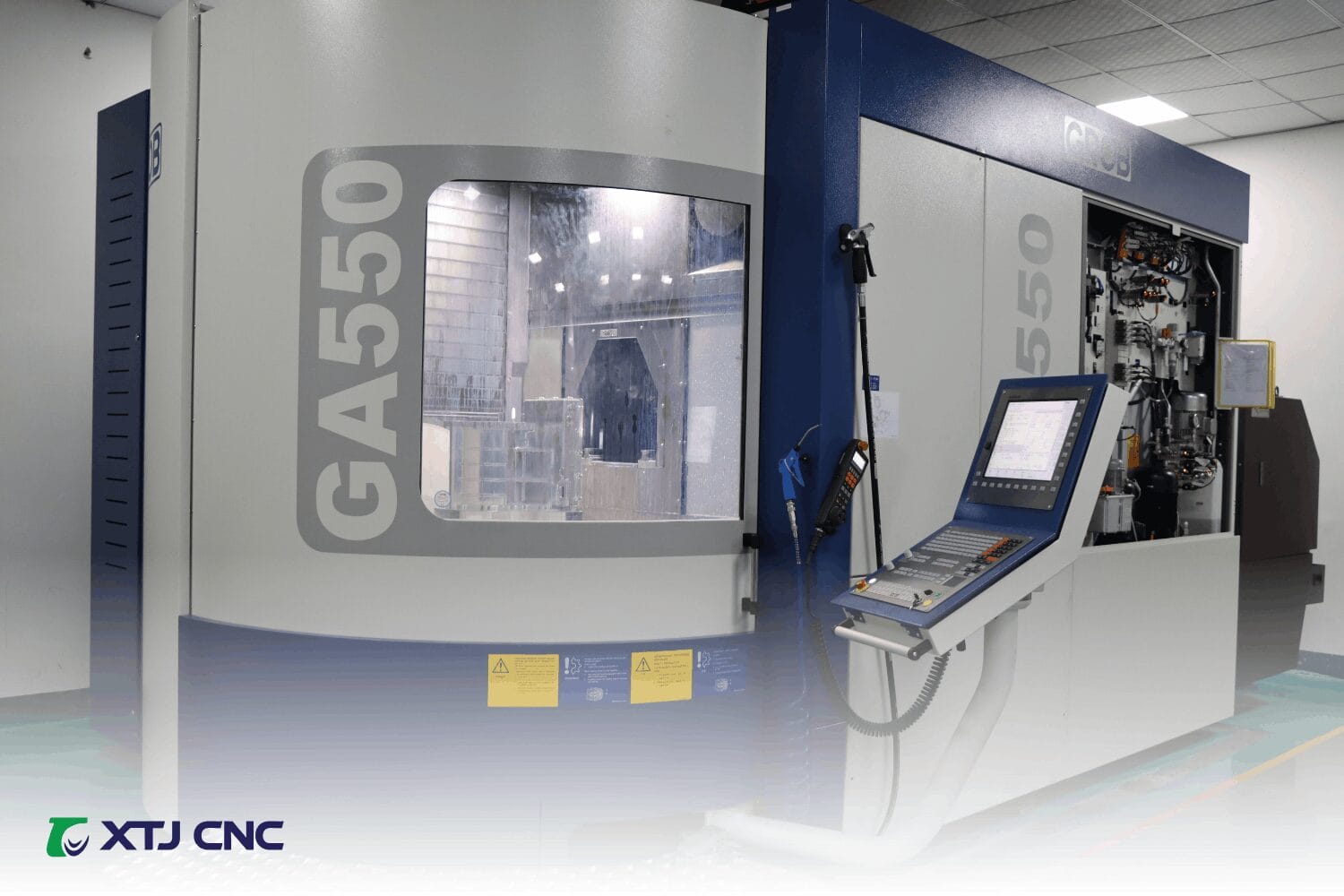
XTJ CNC is a precision custom manufacturing partner operating a 12,000 m² facility in Dongguan with 120+ machines spanning 3-axis to 5-axis CNC milling, turning, sheet metal fabrication, and surface finishing. Clean energy work includes CNC-machined mounting brackets, EV charging pedestal components, custom heat sinks for inverter housings, and structural interface plates for solar and wind turbine installations.
Tolerances reach ±0.003 mm on machined features—precision territory that most sheet-metal-only shops can’t match. ISO 9001 and IATF 16949 certification, CMM inspection, and full material traceability are standard on every order. No MOQ applies: 10 prototype brackets and 5,000 production pieces go through the same engineering and inspection workflow. Every new project receives a free DFM review before a single part is cut.
Right for your project if: You need precision-machined mounting components or custom brackets where tolerance, material certification, and prototype speed matter more than volume pricing on commodity racking. Particularly strong for CNC-machined interface plates, EV charging pedestals, and complex bracket geometries that standard roll-forming can’t produce.
2. Jiangsu Guoqiang Zinc-Plating Industrial Co., Ltd.
Jiangsu Guoqiang is one of China’s largest hot-dip galvanizing operations, with annual capacity exceeding one million tons of galvanized steel products. Their energy division produces ground-mount solar racking, tracker support structures, and utility-scale bracket systems at volume.
The core advantage is vertical integration in the galvanizing process. In-house zinc coating means tighter quality control on coating thickness – typically 65 to 80 µm – and faster turnaround than competitors outsourcing that step. ISO 9001 and ISO 14001 certified. Less suited for small-batch custom work or non-steel materials.
Right for your project if: You’re sourcing high-volume galvanized steel racking for ground-mount solar at competitive per-unit pricing and don’t need custom bracket geometries or multi-material capability.
3. Arctech Solar Holding Co., Ltd.
Arctech is a publicly listed solar tracker manufacturer with installations spanning over 55 GW across 40+ countries. They design and manufacture single-axis trackers, fixed-tilt ground mounts, and floating PV structures, with steel bracket components produced in-house on dedicated roll-forming and welding lines.
Arctech sells engineered tracker systems, not standalone custom brackets. Their SkyLine II system uses an AI-based algorithm that adjusts tilt angles for terrain and weather. Pricing reflects the proprietary system premium. For buyers who want a complete vertically integrated tracker solution rather than fabricated bracket components, Arctech is the strongest option on this list.
Right for your project if: You need a complete single-axis tracker system with validated structural engineering behind it, not custom-fabricated brackets. Arctech is a system supplier, not a contract fabricator.
4. Clenergy International Pty. Ltd.
Clenergy blends engineering design from Australia with manufacturing operations in Xiamen, China. Their range covers rooftop mounts (PVezRack), ground mounts, and carport structures. Aluminum rail profiles are designed for tool-free installation – a genuine advantage in labor costs for large rooftop deployments.
TUV certification and wind-load ratings validated per AS/NZS 1170 and EN 1991 give Clenergy structural credibility that most China-only suppliers can’t match. MOQs apply for custom configurations. For international buyers who want a recognized brand with validated engineering, Clenergy is worth the premium over generic racking suppliers.
Right for your project if: You need a mounting system with internationally validated structural engineering (TUV, AS/NZS) and Western engineering oversight behind the product, particularly for rooftop or carport installations.
5. Antai Solar Technology Co., Ltd.
Antai specializes in custom-engineered mounting solutions covering sloped rooftops, flat roofs, agrivoltaic farms, and building-integrated PV (BIPV) installations. Their Xiamen facility runs CNC machining alongside aluminum extrusion and sheet metal fabrication, giving them a process range to produce both standard racking and non-standard custom brackets.
With mounting systems shipped to 100+ countries and over 20 GW of cumulative installed capacity, Antai’s export credentials are solid. CE and TUV certifications are in place. For projects with non-standard requirements—unusual roof angles, integrated PV facades, or custom bracket geometries—their engineering team works through the design challenge rather than quoting from a catalogue.
Right for your project if: Your installation has non-standard requirements: unusual roof geometry, BIPV facades, agrivoltaic configurations, or custom bracket designs that off-the-shelf racking systems can’t accommodate.
6. Shanghai Starway Engineering & Manufacturing Co., Ltd.
Starway is a precision sheet metal fabrication house serving multiple industries, including clean energy. They produce custom mounting brackets, EV charging station enclosures and pedestals, electrical cabinets, and structural components. Fiber laser cutting, CNC bending (Amada press brakes), robotic welding, and in-house powder coating are all operated in-house.
IATF 16949 certification signals process discipline that goes beyond standard ISO 9001—uncommon for a fabrication house outside the automotive supply chain. For buyers who need custom-fabricated brackets or enclosures across multiple energy sectors from a single supplier, Starway’s integrated capability and automotive-grade quality system are the differentiators.
Right for your project if: You need custom-fabricated brackets or enclosures across solar, EV charging, and wind turbine applications from one supplier, with IATF 16949-grade process documentation.
7. Xiamen Corigy New Energy Technology Co., Ltd.
Corigy exports solar mounting systems across 80+ countries, with product lines covering ground screws, ballasted rooftop mounts, rail-less systems, and carport structures. Their engineering team offers structural design services, including load analysis and wind-tunnel validation for specific project sites.
Standard product shipment runs as little as two weeks. OEM customization – modified rail profiles, bracket angles, non-standard configurations – is accommodated with reasonable lead times. ISO 9001, CE, and SGS certifications in place. For EPC firms and distributors needing flexible racking supply with genuine OEM customization capability, Corigy is practical.
Right for your project if: You’re an EPC firm or distributor needing flexible racking supply with OEM customization, fast standard-product turnaround, and established export logistics across multiple regions.
8. Xiamen HQ Mount Tech Co., Ltd.
HQ Mount, founded in 2015, produces ground-mount, rooftop, and carport solar racking systems in aluminum alloy and zinc-aluminum-magnesium (ZAM) coated steel. Their GT4 ground system uses ZAM steel, offering better corrosion resistance than standard hot-dip galvanizing at a modest cost premium. Pre-assembled rack sections reduce field installation time.
Pricing sits at the budget-to-mid-range tier. ISO 9001 and CE certified. For cost-sensitive utility-scale projects where corrosion resistance matters but premium-brand pricing doesn’t fit the budget, HQ Mount’s ZAM-coated ground systems offer a practical middle ground. Less suited for complex custom bracket work.
Right for your project if: You need cost-competitive ground-mount racking with better-than-standard corrosion resistance (ZAM coating) without the premium pricing of top-tier brands.
9. Xiamen Solar First Energy Technology Co., Ltd.
Solar First covers a wide product range: single-axis trackers, flat-roof ballasted systems, floating PV mounts, and carport structures. Modular design allows up to 30% reduction in field assembly time compared to traditional racking configurations. TUV and SGS certifications are in place for aluminum and galvanized steel components.
Distribution networks across South America and Southeast Asia are well-established. For buyers looking for modular mounting systems across multiple application types—ground, roof, carport, and floating—from a single supplier with proven export logistics, Solar First covers more application types than most specialists on this list.
Right for your project if: You need modular mounting systems across multiple application types from one supplier, with fast field assembly and established export logistics in emerging markets.
10. Fabmann Custom Fabrication
Fabmann operates as a contract manufacturer of custom metal brackets, structural weldments, and formed components. Unlike the solar-specialist companies on this list, Fabmann is a general-purpose fabrication house that takes on custom energy bracket orders alongside industrial work. Process capabilities include CNC punching, laser cutting, bending, welding, and hot-dip galvanizing.
Products include solar mounting brackets, wind turbine component brackets, cable tray supports, and EV charging station structural parts. For buyers whose mounting hardware design is proprietary—where you own the geometry and need a factory to build it to spec rather than selecting from a catalog—Fabmann’s contract fabrication model fits that requirement.
Right for your project if: You have a proprietary bracket design and need a contract fabricator to build it to spec. Fabmann serves buyers who own their geometry and want a factory partner, not a product supplier.
What does Clean Energy Mounting Hardware Actually Need to Deliver?
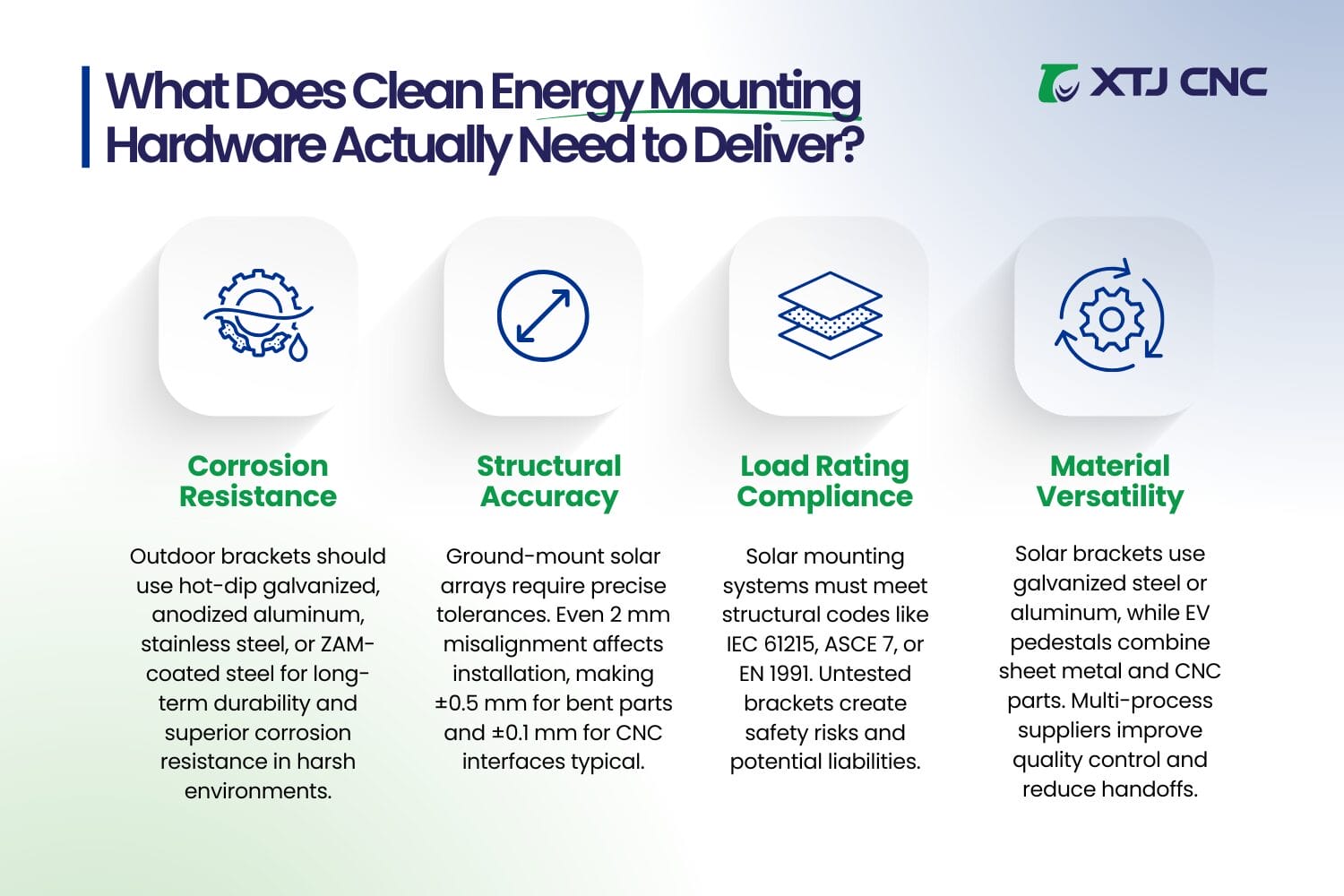
Mounting hardware for solar, wind turbine, and EV charging infrastructure isn’t decorative. These are structurally critical components exposed to UV degradation, cyclic wind loading, salt spray, and temperature swings from −40°C to +85°C across a 25-year service life. Four engineering requirements are non-negotiable.
Corrosion resistance: Outdoor mounting brackets need hot-dip galvanizing (per ASTM A123/A153), anodized aluminum (per ASTM B580), or stainless steel construction to survive decades of environmental exposure. Zinc-aluminum-magnesium (ZAM) coated steel is gaining traction for superior salt-spray performance, typically exceeding 1,500 hours in ASTM B117 testing.
Structural accuracy: Ground-mount solar arrays span tens of meters. If your rail profile is off by 2 mm over a 6-meter length, panel alignment suffers, and installation crews lose hours shimming. Tolerances of ±0.5 mm on bent sheet metal and ±0.1 mm on CNC-machined interfaces are typical minimum requirements for production hardware.
Load rating compliance: Mounting systems must meet local structural codes: IEC 61215 for PV modules, ASCE 7 for wind and snow loads in the US, and EN 1991 in Europe. A bracket that looks right but hasn’t been tested to the load spec is a liability, not a cost saving.
Material versatility: Solar tracker brackets tend to use galvanized steel for a stiffness-to-cost ratio. Rooftop mounts favor aluminum for weight savings. EV charging pedestals often combine sheet metal enclosures with CNC-machined internal mounting plates. A supplier that handles multiple materials and processes without subcontracting gives you fewer handoff points and tighter quality control.
Which Materials Work Best for Solar and Energy Brackets?
Material selection depends on installation environment, structural load, and budget. The matrix below maps the five most common options to their practical tradeoffs for clean energy mounting applications.
| Material | Weight | Corrosion Resistance | Structural Stiffness | Best Application |
|---|---|---|---|---|
| Aluminum 6061-T6 / 6063-T5 | Light (2.7 g/cm³) | Excellent (native oxide layer) | Moderate (69 GPa) | Rooftop mounts, rail profiles, and carport structures |
| Hot-dip galvanized steel (ASTM A123) | Heavy (7.8 g/cm³) | Good (50–75 µm Zn coating) | High (200 GPa) | Ground-mount arrays, tracker support structures |
| ZAM-coated steel | Heavy (7.8 g/cm³) | Very good (1,500+ hrs ASTM B117) | High (200 GPa) | Coastal ground-mount, high-humidity sites |
| Stainless steel 304 / 316L | Heavy (8.0 g/cm³) | Excellent (passive layer + Mo in 316L) | High (193 GPa) | Marine environments, floating PV, critical fasteners |
| Powder-coated sheet steel (1.5–2.0 mm) | Medium | Good (UV-stable coating) | Medium | EV charging pedestals, indoor mounting plates |
For applications combining structural sheet metal fabrication with precision-machined interfaces, XTJ CNC’s integrated facility handles both processes under one roof, from laser-cut galvanized steel frames through to CNC-machined bearing surfaces and mating faces.
How XTJ CNCManufactures Custom Energy Brackets
Most solar mounting hardware is produced by roll forming and press braking. That works for standard rail profiles and simple bent brackets. When geometry becomes more complex—tracker pivot interfaces, inverter mounting plates with precision hole patterns, and EV charging pedestal base plates with flatness requirements below ±0.1 mm—roll forming runs out of capability.
XTJ CNC handles both sheet metal fabrication and precision CNC machining under one roof. A galvanized steel bracket frame can be fabricated and then CNC-machined on its critical surfaces without leaving the facility. Every new project starts with a free DFM review, including bend radii, hole placements, and material specs, before a single part is cut. Prototypes ship in as few as five days with a full FAIR and CMM data included.
ISO 9001 and IATF 16949 certifications apply to every energy bracket order. Upload your design files for a free quote and DFM review. Pricing and engineering feedback come back within 24 hours.
FAQs on Top Solar / Energy Mounting & Bracket Manufacturers in China
What tolerances can CNC machining achieve on solar mounting brackets?
Standard sheet metal bending holds ±0.5 mm on most bracket geometries. CNC machining tightens that to ±0.05 mm for standard features and ±0.003 mm for precision interfaces such as bearing surfaces or mating faces. For most solar mounting hardware, ±0.1 to 0.5 mm is sufficient. Tighter tolerances should be reserved for critical interfaces where panel alignment or mechanical interlock depends on dimensional precision.
When does CNC machining make more sense than press braking for energy brackets?
Press braking is the right process for simple bent brackets, structural channels, and rail profiles where geometry is consistent and volumes justify the setup. CNC machining adds value when your bracket has precision-located hole patterns, milled mounting surfaces, or features that press braking can’t produce cleanly—complex contours, tight flatness requirements, or recesses for hardware inserts. Many production brackets combine both: press-braked structural frames with CNC-machined critical interfaces. Running both processes under one roof eliminates the quality handoff between a sheet metal shop and a machining supplier.
What’s the difference between hot-dip galvanizing and ZAM coating for solar brackets?
Hot-dip galvanizing applies a pure zinc layer, typically 50 to 75 µm per ASTM A123, and provides reliable corrosion protection for most inland solar installations. ZAM (zinc-aluminum-magnesium) coating adds aluminum and magnesium to the zinc layer, significantly improving salt-spray performance. ZAM-coated steel routinely exceeds 1,500 hours in ASTM B117 salt-spray testing, compared to roughly 500 to 700 hours for standard galvanizing at comparable coating thickness. The cost premium for ZAM runs around 10 to 15% over standard galvanizing—justified for coastal or high-humidity sites, unnecessary for standard inland ground-mount projects.
How do you verify a China supplier’s load-rating claims before committing to a production order?
Request third-party test reports, not supplier-generated data. Structural mounting hardware should be validated against the relevant load standard for your project location: IEC 61215 for PV modules, ASCE 7 for wind and snow loads in the US, or EN 1991 for European sites. Ask whether testing was performed by an accredited lab and whether full reports are available for review. For custom brackets, request a finite element analysis (FEA) report or structural calculation package covering the specific load conditions at your site. A supplier who can’t provide documentation beyond a general catalog spec is telling you something important.
Does XTJ CNC have a minimum order quantity for custom energy brackets?
No, XTJ CNC accepts orders from single prototypes through production batches of 5,000+ parts. The facility is structured for both low-volume precision work and scalable production, so you don’t need to commit to high volumes before validating your design. Prototype brackets with full first-article inspection are available from a single piece.
Back to Top: Top 10 Solar / Energy Mounting & Bracket Manufacturers in China (2026)