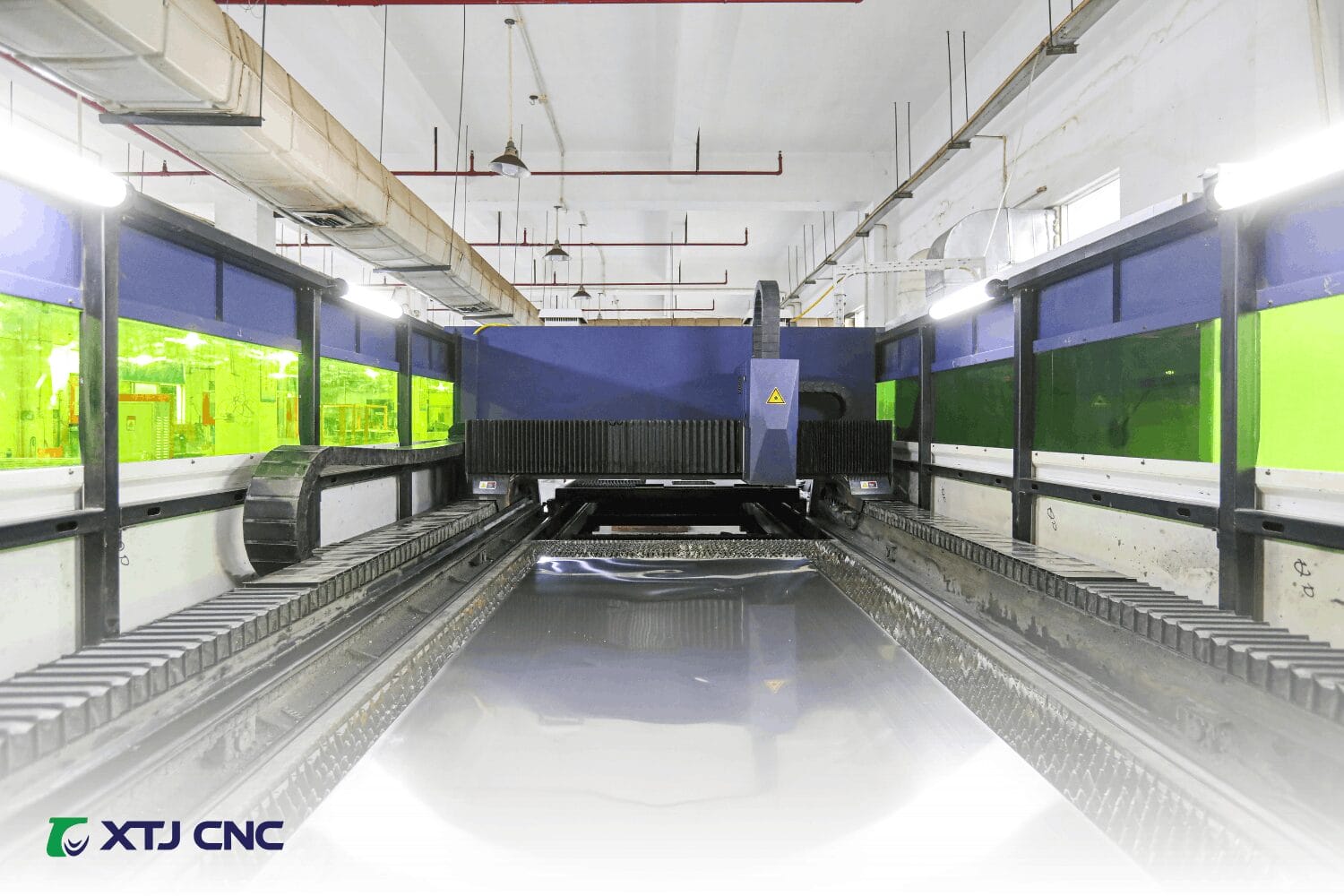
There are thousands of laser cutting shops in China. Finding the best ones – suppliers that hold ±0.1 mm on a production run, trace material back to the mill certificate, and ship on time – narrows the field considerably.
The global sheet metal fabrication services market is projected at roughly $19.4 billion in 2026, with Asia-Pacific accounting for over 45% of that total, according to Straits Research. China holds the largest single share of that capacity. The concentration of fiber laser equipment, trained operators, and raw material supply chains across the Pearl River Delta and Yangtze Delta regions is difficult to replicate anywhere else. That density gives Chinese fabricators a structural cost and speed advantage over most competing regions.
That concentration of capacity also means plenty of shops running worn-out equipment with no incoming material inspection. This guide is built for engineers and procurement teams evaluating custom sheet metal fabrication in China, focused on what actually matters when you’re placing an RFQ: equipment, tolerances, certifications, secondary capabilities, and engineering support.
What Makes a Reliable Laser Cut Sheet Metal Supplier in China?
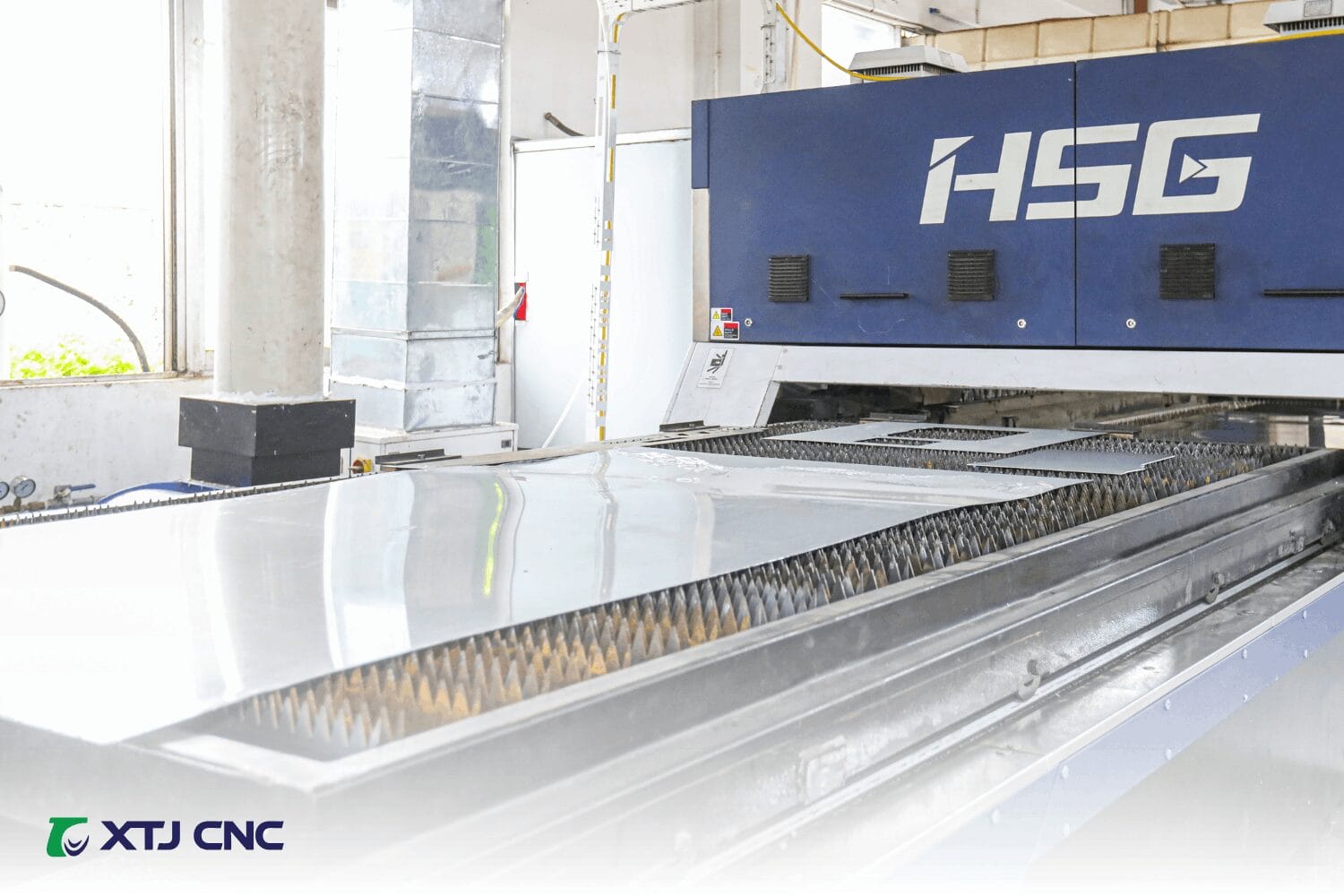
Not every shop with a fiber laser deserves your RFQ. Here’s what to screen for before you start comparing quotes.
- Laser equipment: Fiber has replaced CO2 as the production standard for metal cutting. For standard gauge work, 3 to 6 kW covers most jobs. Higher wattage cuts a thicker plate faster, but adds cost you may not need.
- Tolerance verification: Standard fiber laser cutting holds ±0.1 mm on material under 6 mm; well-calibrated systems reach ±0.05 mm under 3 mm. Ask how they verify it. No CMM data means the spec is a marketing claim.
- Certifications: ISO 9001 is the baseline. Add IATF 16949 for automotive, ISO 13485 for medical. Also ask about incoming material inspection – a shop that doesn’t check mill certs will eventually ship the wrong grade.
- Secondary operations: Most parts need bending, welding, or finishing after cutting. In-house capability means fewer handoffs, shorter lead times, and a single point of accountability.
- DFM support: A manufacturing partner flags design issues before production starts. A cutting service just runs your file. Ask upfront whether DFM review is part of their quoting process.
Comparison Table: Top Laser Cut Sheet Metal Manufacturers in China
The table below provides a capability-level snapshot of all 10 suppliers. Lead times reflect typical ranges for standard orders, including secondary operations. Actual timelines depend on part complexity, batch size, and current shop capacity.
| Manufacturer | Location | Laser Type | Precision | Lead Time | Key Certifications |
|---|---|---|---|---|---|
| XTJ CNC | Dongguan | Fiber | ±0.05 mm | 5–10 days | ISO 9001, IATF 16949 |
| Komaspec | Shenzhen | Fiber | ±0.1 mm | 10–15 days | ISO 9001, ISO 14001 |
| Hubs (Protolabs Network) | Distributed | Fiber | ±0.1 mm | 10–20 days | ISO 9001 |
| SPI (Super-Ingenuity) | Dongguan | Fiber | ±0.05 mm | 7–12 days | ISO 9001, IATF 16949 |
| Yijin Hardware | Shenzhen | Fiber | ±0.1 mm | 3–10 days | ISO 9001, ISO 14001 |
| Fabmann | Dongguan | Fiber | ±0.1 mm | 7–15 days | ISO 9001 |
| JUSHUN | Guangzhou | Fiber | ±0.1 mm | 7–14 days | ISO 9001 |
| Komacut | Shenzhen | Fiber | ±0.1 mm | 10–18 days | ISO 9001, AS9100 |
| Masion | Shenzhen | Fiber | ±0.1 mm | 7–15 days | ISO 9001, IATF 16949 |
| DSR Hardware | Shenzhen | Fiber | ±0.1 mm | 7–12 days | ISO 9001 |
*Note: Lead times are estimates for finished parts (cutting plus secondary operations). Prototype and expedited timelines may differ. Always confirm current capacity with your supplier before placing orders.
Top 10 Laser Cut Sheet Metal Manufacturers in China
1. XTJ CNC
XTJ CNC is an on-demand custom manufacturing partner based in Dongguan with 20+ years of experience across CNC machining and sheet metal fabrication. The facility covers 12,000 m² with 120+ machines, including multi-kilowatt fiber lasers and a 300-person team spanning engineering, production, and quality control.
Tolerance capability and flexibility set XTJ CNC apart from most competitors on this list. Laser cutting reaches ±0.05 mm, and CNC operations hold ±0.003 mm. There’s no Minimum Order Quantity (MOQ), so a 10-piece prototype run receives the same process discipline as a 5,000-part production batch. ISO 9001 and IATF 16949 certification, CMM inspection, and full material traceability are standard on every order.
Every new project includes a free DFM review. The engineering team examines your design for features that drive up cost or create manufacturing risk, then recommends changes before production begins. That step regularly reduces per-part costs by 15 to 30%.
Best for: Tight tolerances, full vertical integration (cutting, bending, welding, and finishing), and projects that require fast prototyping with scalable production. Particularly strong in automotive, medical, and electronics enclosure work.
2. Komaspec
Komaspec operates from Shenzhen with a Western management structure, originally Canadian-founded. The service covers laser cutting as part of a broader sheet metal and CNC machining offering, geared toward medium-to-high-volume production. Their fiber laser cutting capability handles standard gauge sheet metal across mild steel, stainless steel, and aluminum.
Their strengths are documentation and project management. If you’re accustomed to North American or European supplier communication standards and don’t want to adjust your workflow, Komaspec provides that bridge. Western management overhead means lead times and costs tend to run higher than purely domestic Chinese operations of comparable capability.
Best for: Buyers who need China-based production with Western-style project management, quality documentation, and engineering communication.
3. Hubs (Protolabs Network)
Hubs, now part of Protolabs, operates as a distributed manufacturing network. You upload CAD files, receive an automated or semi-automated quote, and the job routes to a vetted partner facility. Production location varies depending on specs, timeline, and geographic preference. The platform supports laser-cut sheet metal orders alongside other fabrication processes, routing jobs to vetted partner facilities based on your specs.
The platform handles quoting, scheduling, and quality auditing, which makes it fast and convenient for prototyping and low-volume orders. The tradeoff is that you lose direct supplier contact. If your part requires iteration or something goes wrong mid-production, you’re working through a platform layer rather than speaking directly with the shop floor engineer running your job. For higher volumes, going direct to a capable Chinese fabricator typically yields better per-part costs.
Best for: Rapid prototyping, quick-turn low-volume orders, and buyers who prioritize platform convenience over direct supplier relationships.
4. SPI (Super-Ingenuity)
SPI is a Dongguan-based fabricator with over 20 years of export-focused sheet metal work. They hold ISO 9001 and IATF 16949, and their laser cutting capability reaches ±0.05 mm with CMM-backed inspection.
The factory-direct model – no trading company intermediary – keeps costs competitive. SPI offers 24-hour quotation turnaround and no MOQ, which makes them a practical option for R&D teams running engineering trials alongside production. Published case studies reference work with Japanese Tier 2 automotive suppliers, indicating genuine experience with demanding incoming inspection requirements.
Best for: Automotive and industrial buyers seeking factory-direct access, IATF-grade quality systems, and fast quoting.
5. Yijin Solution
Yijin Hardware, based in Shenzhen, specializes in fiber laser cut sheet metal with a full secondary fabrication service covering bending, welding, and surface treatment. Sample laser cut parts turn around in as fast as one to three days. Their fiber laser cutting covers mild steel, stainless steel, aluminum, and galvanized sheet across standard production gauges. Kerf tolerances hold to ±0.1 mm, with fast nesting turnaround suited to small and medium batch runs.
Speed on small and medium-sized orders is their primary strength. ISO 9001 and ISO 14001 certifications are in place, and their English-language quoting and communication workflows are accessible. For high-volume or tight-tolerance production, push for detailed process capability data during qualification. Published tolerance specs are stated in general terms, so ask for inspection data on comparable jobs.
Best for: Fast sample turns, small to medium batches, and buyers who value accessible online engagement with broad material options.
6. Fabmann
Fabmann, based in Dongguan, focuses on custom laser-cut sheet metal for medical equipment, food processing, telecom, and sporting goods applications. They cut Cold-Rolled Coil (CRC), Hot-Rolled Coil (HRC), and stainless steel grades 304, 316, and 316L, plus structural sections including angles, tubes, and beams – a broader profile range than competitors focused solely on flat sheet.
Tolerances conform to ISO 2768 class F. Secondary fabrication includes press braking, stamping, welding, and surface treatments that include zinc plating, powder coating, and hot-dip galvanizing rated for C5 corrosive environments. If your application involves structural components exposed to harsh conditions, Fabmann’s finishing capabilities are worth evaluating.
Best for: Structural and industrial applications requiring corrosion-resistant finishes, and projects involving tubes, angles, or beams alongside flat sheet work.
7. JUSHUN
JUSHUN, based in Guangzhou, operates as an end-to-end custom sheet metal fabrication house. Their process chain runs from DFM engineering and CAD review through fiber laser cutting, CNC bending, multiple welding methods (TIG, MIG, spot, and laser), finishing, hardware installation, and final assembly. Their fiber laser cutting handles mild steel, stainless steel, and aluminum sheet with tolerances to ±0.1 mm. Cutting feeds directly into in-house bending and welding lines, keeping laser-cut sheet metal parts on a single production track.
Assembly integration is the differentiator. If your project involves assembled products, such as equipment cabinets, enclosures, or structural frames with hardware and panel components, JUSHUN can handle fabrication through final assembly under one roof. That reduces your vendor count and compresses lead time compared to managing separate cutting, finishing, and assembly suppliers.
Best for: Original Equipment Manufacturer (OEM) buyers needing turnkey assemblies, custom enclosures, and integrated fabrication-to-assembly production.
8. Komacut
Komacut is a Canadian-owned operation with production based in Shenzhen. Like Komaspec, a related entity, they apply Western quality standards to China-based manufacturing. Their focus leans toward precision laser cutting specifically, rather than broad full-service fabrication. Their fiber laser cutting focuses on tight-tolerance sheet metal profiles in stainless steel, aluminum, and mild steel. Precision is a stated priority, with part geometries held closer than standard production shops
Komacut holds AS9100 certification alongside ISO 9001. AS9100 is uncommon among Chinese sheet metal shops, and it signals capability for high-reliability applications requiring stringent traceability. For projects that demand AS9100-level documentation, the pool of certified fabricators in China is limited–Komacut is one of the few options available.
Best for: Buyers requiring AS9100-grade traceability, Western-managed quality oversight, and high-reliability documentation.
9. Masion
Masion, based in Shenzhen, is a precision sheet metal manufacturer offering laser cutting within a vertically integrated fabrication service. They hold IATF 16949 and ISO 9001, placing them in the automotive-capable tier. Minimum order quantity starts at one piece, and DFM support is included in the quoting process. Their fiber laser cutting handles stainless steel, aluminum, and carbon sheet across prototype and production volumes. Cutting tolerances sit at ±0.1 mm, feeding directly into in-house bending and forming lines.
Fiber laser cutting feeds into bending, forming, and finishing lines under one roof. Vertical integration keeps costs competitive on medium-volume work. They serve the automotive, electronics, and industrial equipment sectors.
Best for: Automotive-tier fabrication, medium-volume production runs, and projects requiring IATF 16949 certification.
10. DSR Hardware
DSR Hardware operates from Shenzhen with fiber laser cutting across a notably broad material range: stainless steel grades 17-4 PH, 301, 304, 316, 410, 430, and 440C, plus aluminum, carbon steel, copper, and brass. That breadth is one of the widest on this list for laser cutting specifically.
Published tolerance sits at ±0.1 mm, which is standard for production laser cutting. DSR is a practical choice for projects where competent cutting and basic finishing matter more than premium project management or extensive quality documentation. For cost-driven applications across varied materials, they offer a direct path to getting parts made.
Best for: Broad material range requirements, cost-driven projects, and applications where standard tolerances are sufficient.
Fiber vs. CO2 Laser Cutting: Why It Matters for Your Sourcing Decision
If you’re sourcing laser-cut sheet metal parts from China in 2026, you’re almost certainly receiving fiber-cut parts. That shift has been underway for over a decade, and it’s now essentially complete for metal cutting. Understanding why fiber won – and what that means for your parts – helps you ask better questions during supplier qualification.
How the two technologies differ
The core difference is wavelength. Fiber lasers operate at 1 µm; CO2 lasers operate at 10.6 µm. Metals absorb energy at the fiber wavelength far more efficiently, which is why fiber produces faster cutting speeds, lower energy consumption, and tighter part geometries. On 1 mm mild steel, fiber runs three to six times faster than CO2. According to analysis published by Laserax, fiber lasers also deliver roughly 50% lower operating costs than CO2 systems – savings that flow through to your per-part price.
What this means for your parts
Kerf width, the material removed by the cut, runs 0.1 to 0.3 mm on fiber versus 0.2 to 0.5 mm on CO2. That narrower kerf translates directly into tighter dimensional control, less scrap per sheet, and better nesting efficiency. Edge quality for thermal cuts is standardized under ISO 9013, which defines perpendicularity tolerance and surface roughness grades. Fiber-cut edges consistently perform better against those grades on thin to medium gauge metal.
Where CO2 still applies
CO2 retains a legitimate role for non-metals – acrylic, wood, and certain plastics absorb CO2 wavelengths well. For metal sheet work, it’s no longer the right tool. If a supplier is quoting your stainless or aluminum job on CO2 equipment, ask why before you proceed.
How does XTJ CNC Compare?
We built XTJ CNC to close the gap between budget shops and premium Western-managed operations. The goal is production-grade precision, engineering depth to handle complex projects, and the flexibility to scale.
Our fiber laser cutting tolerances reach ±0.05 mm, and our CNC machining operations hold ±0.003 mm. We run ISO 9001 and IATF 16949 quality systems, perform CMM inspection of critical dimensions, and maintain full material traceability from stock receipt through delivery. There’s no minimum order quantity.
The facility runs multi-kilowatt fiber laser systems within a 12,000 m² production floor, with cutting feeding directly into in-house bending, welding, and surface finishing lines. For laser-cut sheet metal specifically, vertical integration matters. You’re not coordinating between a cutting shop and a separate finishing vendor – design review, cutting, secondary operations, and quality inspection all happen under one roof, with CMM verification at critical stages.
Every new project receives a free DFM review. Our engineering team examines your design for features that drive cost or create manufacturing risk, then recommends adjustments before you commit to production. For many customers, this step has prevented costly mid-production redesigns.
If you’re evaluating laser cut sheet metal suppliers in China and want a quote based on real engineering review, upload your design files for a free quote and DFM feedback. We respond within 24 hours.
FAQs on Laser Cut Sheet Metal Manufacturers in China
What tolerances can laser cutting achieve on sheet metal?
Standard production fiber laser cutting holds ±0.1 mm (±0.004″) on sheet metal under 6 mm thick. Well-calibrated systems with proper fixturing reach ±0.05 mm (±0.002″) on material under 3 mm. Tolerance loosens as thickness increases: on a plate over 10 mm, expect ±0.2 to 0.5 mm. Always confirm with inspection data rather than a supplier’s published spec sheet.
How do you vet a China-based sheet metal supplier before placing an order?
Start with certifications: ISO 9001 at a minimum, plus IATF 16949 or ISO 13485 if your application demands it. Request first-article inspection reports and CMM data from comparable projects. Ask about incoming material verification. Run a small trial order of five to 10 parts before committing to production volumes. If the supplier resists any of these steps, that tells you something important.
Can laser cutting handle all sheet metal materials?
Fiber lasers cut most production metals: mild steel, stainless steel, aluminum, brass, copper, and galvanized steel. Highly reflective materials like copper and brass were problematic on CO2 equipment, but are handled well by modern fiber systems. Thickness limits depend on laser wattage. A 3 kW fiber laser typically cuts up to 12 to 15 mm on mild steel. A 10 kW system pushes past 25 mm. Beyond that, plasma or waterjet may offer better cost-per-part economics.
What is a realistic lead time for laser-cut sheet metal from China?
Cutting alone can happen in one to three days. Finished parts, such as cutting plus bending, welding, and surface finishing, typically take 7 to 15 days for standard orders and 3 to 7 days for expedited work. Add 3 to 7 days for air freight or 20 to 30 days for sea freight. Confirm whether quoted lead times are calendar days or working days, and whether they include all finishing operations.
Should you choose a laser cutting specialist or a full-service fabricator?
If your parts are flat profiles with no bending, welding, or surface treatment, a cutting specialist offers optimized throughput and nesting. Most real-world sheet metal parts need secondary operations. For those, a full-service fabricator reduces handoff risk, compresses total lead time, and provides single-source accountability.
Back to Top: Top 10 Laser Cut Sheet Metal Manufacturers in China (2026)