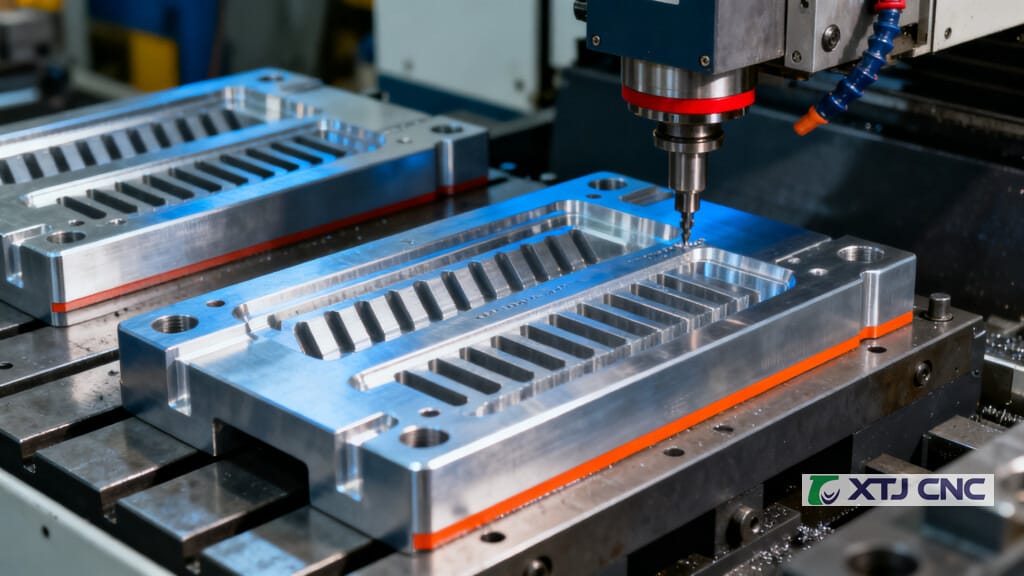
- Bismuth bronze is a lead-free copper alloy designed to meet drinking water regulations while maintaining good machinability and casting properties.
- Bismuth forms discrete particles that help break chips during machining, achieving 80-90% machinability rating compared to free-cutting brass.
- Strength varies by grade from 100-200 MPa for general applications up to 500+ MPa for advanced formulations, with plumbing grades like C89835 specifying minimum 207 MPa UTS.
- Primary applications include potable-water valves, fittings, pump parts, and bushings where lead-free compliance is required.
- Manufacturing success depends on controlling bismuth distribution and avoiding excessive bismuth content that can cause brittleness or hot-short behavior.
What Is Bismuth Bronze?
Bismuth bronze is one of those materials that quietly became “mission critical” as regulations tightened and product safety expectations rose. If you make or source valves, fittings, pump parts, bearings, or machined plumbing components, you have probably seen it marketed as “lead-free bronze” or “bismuth tin bronze.”
At its core, bismuth bronze is a copper alloy developed primarily as a lead-free alternative to traditional leaded bronzes. The driving force is simple: lead is increasingly restricted because of health and environmental concerns, especially in potable-water-contact parts. Bismuth (Bi) is used to deliver some of the machinability and casting behavior that lead used to provide, while keeping lead content insignificant and controlled.
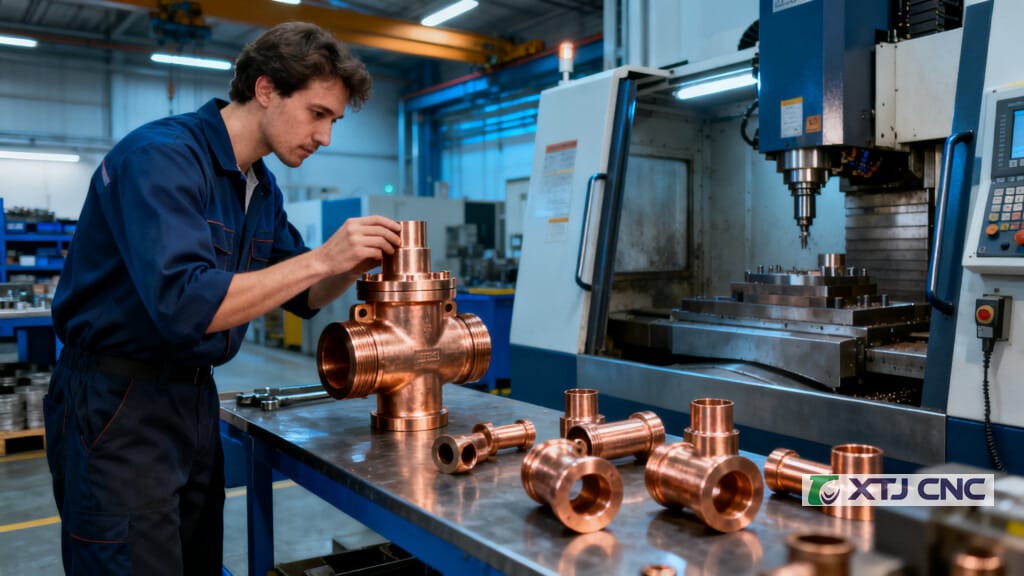
From a safety framing standpoint, bismuth bronze is commonly described as nontoxic in use because lead content is insignificant and controlled, which is why it is heavily associated with potable-water-contact components.
Quick Reference: Bismuth Bronze at a Glance
| Alloy family | Copper-based bronze (Cu alloy) |
| Common chemistry | Cu-Sn-Bi (bismuth tin bronze) |
| Copper (Cu) | Often ~70–90% (broader: ~58–91%) |
| Tin (Sn) | Often ~10–20% (broader: ~0.25–26%) |
| Bismuth (Bi) | Often ~1–6% (broader: ~0.1–20%) |
| Machinability rating | ~80–90% (vs C36000 = 100%) |
| Density | ~8.2–9.2 g/cm³ (0.310–0.330 lb/in³) |
| Liquidus | ~1010–1025°C |
| Electrical conductivity | ~10–25% IACS |
| Key applications | Potable-water valves, fittings, pump parts, bushings |
Why Bismuth Is Used: The Lead-Free Design Rationale
The reason bismuth bronze exists is regulatory and practical at the same time. Lead improves machinability and castability, but it is restricted in many applications due to health and environmental risks. That pressure is particularly strong for products that contact drinking water, such as plumbing systems.
Bismuth is used because it can:
- Improve machinability by acting as a chip breaker (promoting short, segmented chips rather than long stringers)
- Improve casting fluidity (helping fill thin sections and complex geometry)
- Lower the effective melting behavior of the alloy system (bismuth itself melts at 271°C, influencing overall solidification behavior)
A key purchasing reality is that many “lead-free” purchase specs are compliance-driven. Engineers often specify bismuth bronze not because it is the absolute strongest bronze, but because it is a practical way to keep machining costs reasonable while meeting potable-water and lead-reduction rules.
Composition: Typical Element Ranges and What Each Element Does
Base Elements and Typical Composition Windows
Bismuth bronze is not a single composition. It is a family. Still, typical windows show up repeatedly across industrial references:
- Copper (Cu): Typical content about 70–90%, with broader formulation range about 58–83 wt.% in some datasets, and up to 91% in some standard grades
- Tin (Sn): Common content range about 10–20%, with broader formulation range about 0.25–10.0 wt.% in some formulations, and up to 26% in specialized high-tin uses
- Bismuth (Bi): Typical addition range about 1–6%, with broader formulation range about 0.5–7.0 wt.%, and advanced/high-strength formulation range about 10.0–20.0 wt.%
Element-by-Element Roles
Copper (Cu) provides the alloy’s reddish color and supports electrical and thermal conductivity. In many aqueous environments, higher copper content (often cited as above 70 wt.%) generally improves corrosion resistance.
Tin (Sn) is the classic “bronze” alloying element. It is often credited with improving corrosion resistance in marine and mildly acidic environments. In systems that also contain zinc, tin is also discussed as helping reduce dezincification tendencies.
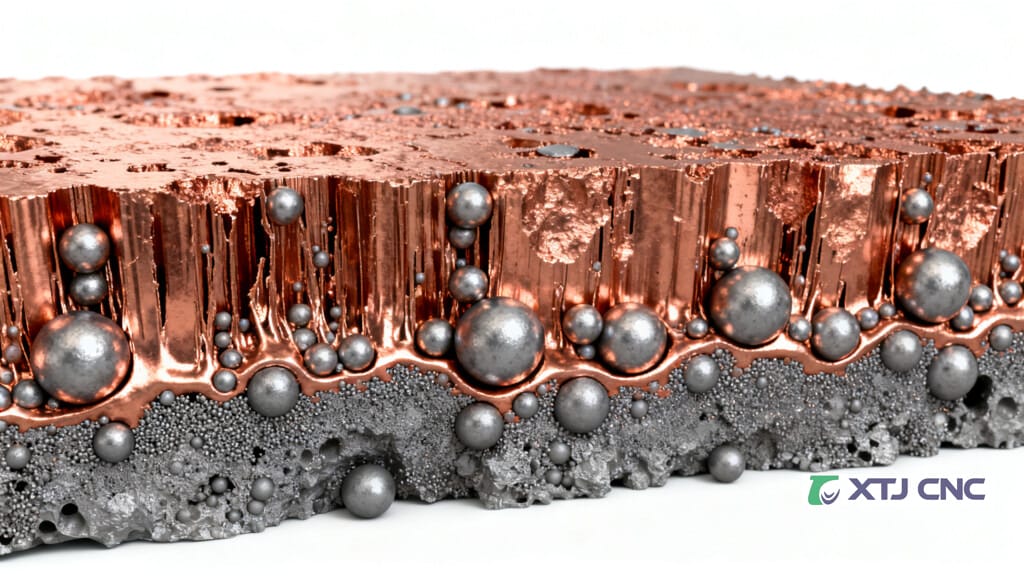
Bismuth (Bi) improves machinability (chip-breaking) and casting fluidity while lowering melting point behavior. This insolubility is the heart of “why bismuth works” as a lead substitute. Because bismuth does not dissolve much into copper, it forms discrete micro-globules that create low-shear features in the microstructure.
Microstructure: What Makes Bismuth Bronze Machine Like Leaded Bronze
Bismuth bronze performance is strongly tied to microstructure, not just the chemistry on a certificate.
Because bismuth is largely insoluble in copper, it forms discrete micro-globules often located around grain boundaries. Reported particle sizes are commonly on the order of 1 to 10 micrometers, and many sources describe an “optimal” distribution when particles are finely dispersed (for example, 1 to 20 micrometers) and uniform.
That particle distribution matters because:
- Fine, well-dispersed bismuth particles act as stress concentrators that promote chip segmentation (helpful for machining)
- They can deform more easily than the surrounding matrix, acting like a solid-lubricant feature under low lubrication
- Coarse or segregated bismuth can hurt surface finish and dimensional consistency
- Too much bismuth, or the wrong thermal history, can create continuous bismuth networks that raise embrittlement risk
Strength and Mechanical Properties
Mechanical properties span a wide range because “bismuth bronze” includes multiple systems and grades.
Strength Characteristics
Ultimate tensile strength (UTS):
- Many general grades: about 100–200 MPa
- Some lead-free copper-zinc-silicon bronzes: about 215–280 N/mm² (31–41 ksi)
- High-bismuth formulations (10–20 wt.% Bi): can exceed 500 MPa
- C89835: minimum UTS 30 ksi (207 MPa)
- C89320: minimum UTS 241 MPa
Yield strength (YS):
- Commonly reported around 100–200 MPa (14.5–29 ksi) in general references
- Cast alloys are often discussed in the 120–180 N/mm² range, with cold-worked conditions higher
- C89835: minimum YS 14 ksi (97 MPa)
- C89320: minimum YS 124 MPa
Ductility and Hardness
Elongation:
- Often around 15–33% in general discussions
- Higher tin (above 12 wt.%) can reduce elongation into roughly 10–20% ranges
- C89835: minimum elongation 6%
- C89320: minimum elongation 15%
Hardness:
- Commonly cited 50–70 HB for many bismuth bronze grades in general summaries
- Some copper-tin systems can be higher depending on tin level and condition (80–150 HB as-cast is cited for some 8–12% Sn alloys)
- Example typical values: C89833 around 60 BHN; C89844 around 55 BHN
Physical and Chemical Properties
Physical Properties
Density: General range about 8.6–9.1 g/cm³ (0.310–0.330 lb/in³). Examples include C89835 about 8.89 g/cm³ and C89833 about 8.78 g/cm³.
Melting behavior: Liquidus commonly around 1010–1025°C (examples: C89835 1012°C; C89833 1025°C). Solidus examples range about 785–853°C depending on grade.
Thermal conductivity: Often cited from about 40–50 W/m·K in some general summaries, and 50–120 W/m·K in broader datasets. Example grades: C89835 about 65.8 W/m·K; C89833 about 71 W/m·K.
Electrical conductivity: Often around 10–25% IACS. Examples: C89835 14.5% IACS; C89833 17.8% IACS; C89844 16.8% IACS.
Chemical Properties: Corrosion Resistance
Bismuth bronze is widely described as having good to very good corrosion resistance. It forms protective oxide layers associated with copper, tin, and bismuth.
Typical guidance from compiled sources:
- Especially common in plumbing and some marine-adjacent uses
- Good general corrosion resistance in neutral to mildly acidic aqueous environments; one dataset cites corrosion rates typically below 0.1 mm/year in potable water systems
- Some sources describe performance as “okay but not great” in salt water
- Aggressive chlorides can cause localized pitting, particularly at bismuth-rich regions
Manufacturing and Machining Considerations
Bismuth bronze is valued because it is castable and machinable, but it still demands process control.
Melting and Alloying Process Windows
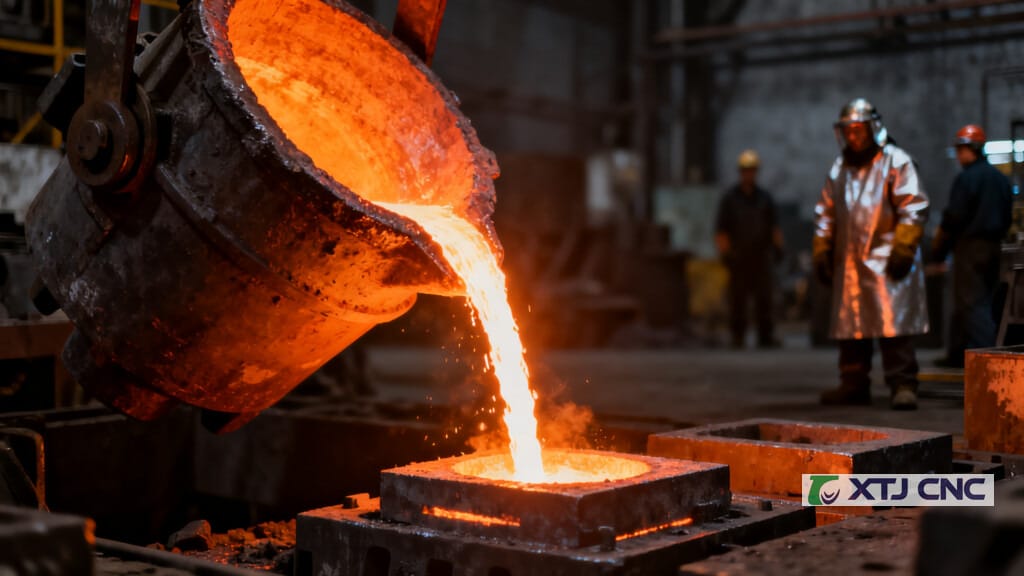
- High-purity copper (at least 99.9% Cu) is commonly melted first at about 1150–1200°C in induction furnaces under protective atmospheres such as nitrogen or argon
- Tin is added around 1100–1150°C and mixed for about 10–15 minutes
- Nickel and iron (if used) are introduced around 1120–1180°C
- Bismuth addition is critical: often added around 950–1050°C, typically plunged beneath the melt surface to reduce volatilization
- Degassing is commonly done using argon or nitrogen purging for about 5–10 minutes around 1050–1100°C
CNC Machining Guidance
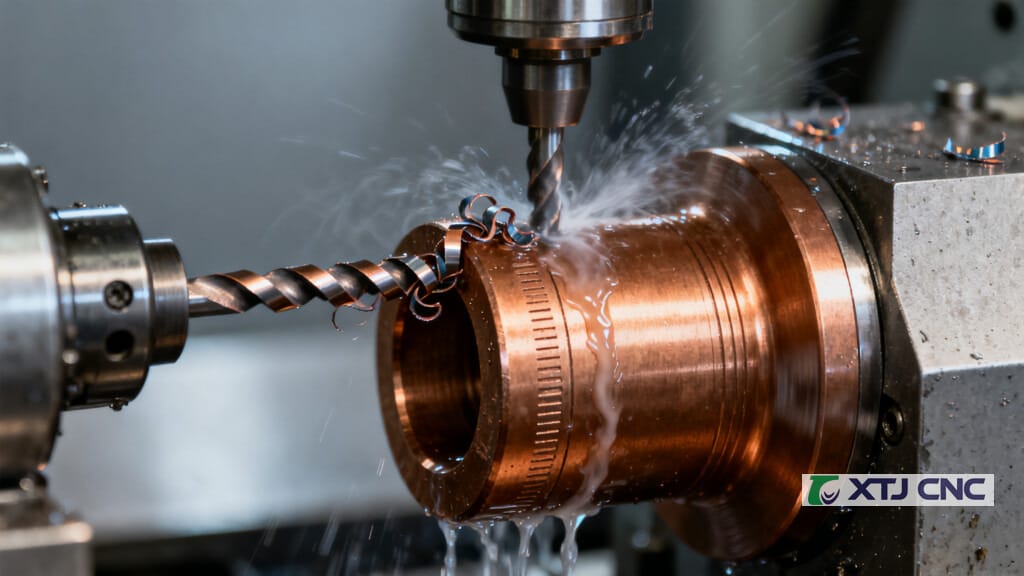
Bismuth bronze is commonly used for turning, milling, drilling, boring, and threading. Published guidance includes:
- Machinability rating around 80–90% (relative scale where C36000 is 100%)
- Turning cutting speeds reported around 80–150 m/min in some sources
- For CNC milling, sharp carbide tools and good lubrication are commonly recommended; one summary cites 100–200 m/min as a milling speed range
- Achievable surface roughness is often cited around Ra 0.8–3.2 micrometers, depending on setup and grade
Applications: Where Bismuth Bronze Is Commonly Used
Bismuth bronze’s “sweet spot” is compliance-driven hardware that still needs to machine and cast efficiently.
Plumbing and Potable-Water Systems
This is the headline application category:
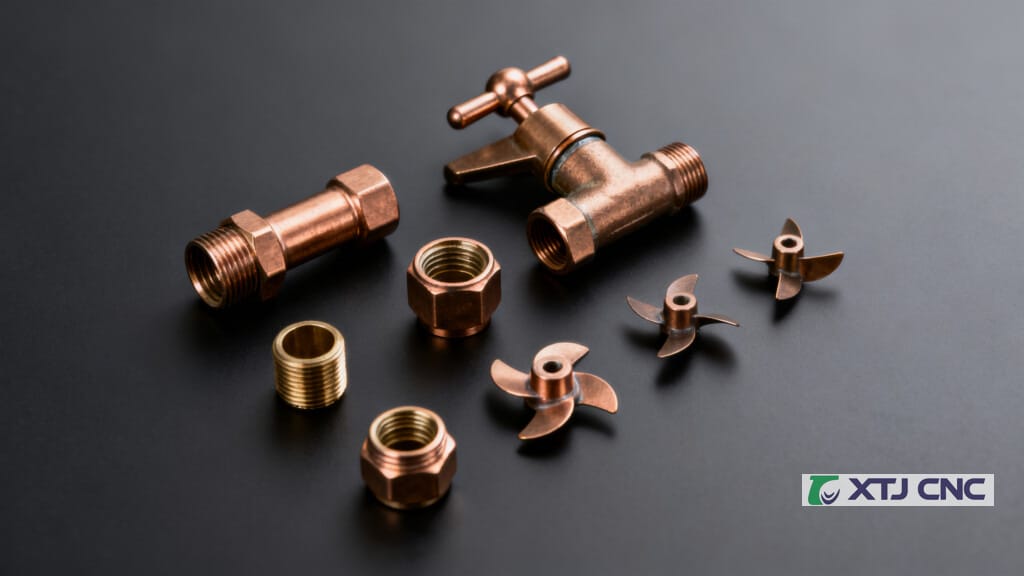
- Lead-free valves, valve bodies, and valve components
- Pipe fittings, threaded fittings, unions
- Faucets and wetted components
- Water pump components, including impellers
- Municipal water system components
Bearings and Bushings
Bismuth bronze is used in:
- Machinery bushings and bearing components
- Automotive bushings and tribologic system bushes
- Self-lubricating sintered bearings for high-temperature, high-speed, high-load scenarios
- Specific alloys like C89320 are cited as bismuth-containing tin bronze bearing alloys
Other Applications
- Fasteners and general industrial components (screws, nuts, bolts)
- Artistic and decorative items (sculptures, ornaments, jewelry)
- Musical instruments (certain instrument components or decorative fittings)
- Electrical and automotive components (switches, connectors, specialized sliding components)
- Specialized applications (drawing die molds, wear-resistant tooling, occasional aerospace use)
Advantages
- Compliance advantage: designed to meet lead-free mandates for potable-water-contact parts (typically under 0.25% weighted average lead on wetted surfaces)
- Very good machinability for a lead-free copper alloy (often 80–90% rating)
- Good castability and fluidity, with a relatively favorable melting range for foundry production
- Good to very good corrosion resistance for many plumbing and general aqueous environments
- Generally a drop-in functional replacement for many leaded bronze applications when engineered correctly
Disadvantages
- Cost can be higher than leaded bronze because bismuth is less abundant and more expensive in many supply chains
- Risk of brittleness or embrittlement if bismuth content is too high or microstructure control is poor
- Not always the best performer in aggressive chloride or salt-water exposure; localized pitting can occur
- Welding is often discouraged for common lead-free bismuth bronze plumbing grades
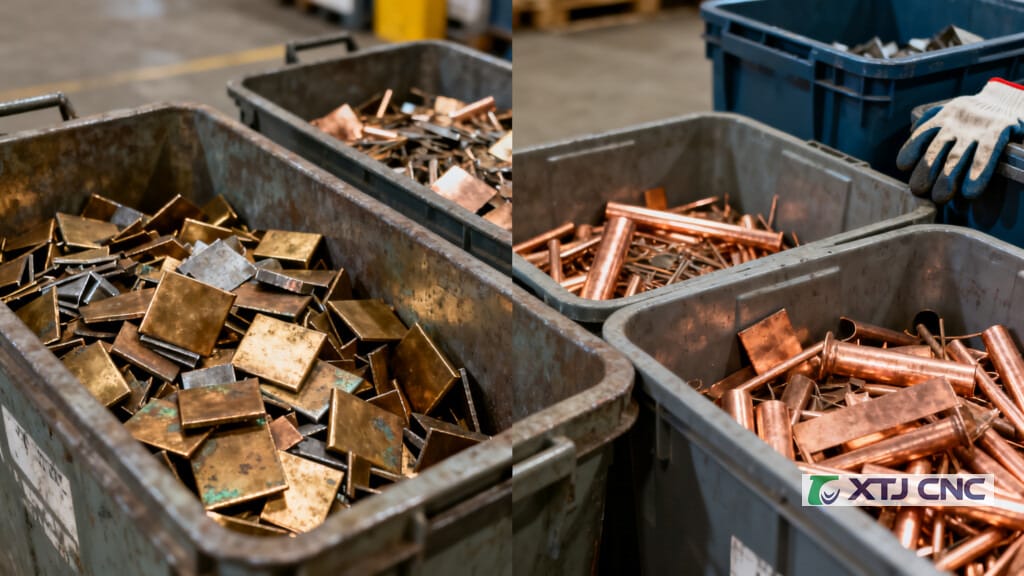
- Recycling requires discipline: bismuth is a potent embrittler for some high-copper alloys, so scrap must be sorted carefully
Standards, Regulations, and Market Context
Bismuth bronze adoption tracks regulation. Commonly cited drivers include:
- U.S. EPA Lead and Copper Rule (1991) establishing protective lead standards for drinking water
- Reduction of Lead in Drinking Water Act (effective 2014) tightening the “lead-free” definition to a weighted-average maximum of 0.25% lead on wetted surfaces
- NSF/ANSI/CAN 61-2022 for drinking-water-contact health effects requirements
- European REACH regulations encouraging lead-free material transitions
- State-level drivers such as California AB1953 and Vermont Act 193
Market data suggests bismuth bronze is growing from roughly $0.5 billion in 2024 to about $0.9 billion by 2034, implying about a 6% annual growth rate, largely attributed to regulatory pressure and sustainability positioning.
Recycling and scrap-stream control is an often-overlooked issue: because bismuth can embrittle high-copper alloys, it needs separation from alloy streams such as aluminum bronzes or copper-nickel alloys.
Conclusion: When to Specify Bismuth Bronze
Bismuth bronze is best understood as an engineering solution to a compliance problem: how to keep bronze-like corrosion resistance and foundry behavior, while replacing lead’s machinability benefits with bismuth particles that help chips break and parts machine cleanly.
If you are selecting materials for potable-water valves, fittings, pump components, bushings, or machined industrial parts where lead limits apply, bismuth bronze is often a practical and widely adopted answer. The keys to success are specifying the correct grade (not just “lead-free bronze”), requiring relevant certifications for wetted applications, and working with a manufacturer who controls melt practice and microstructure so bismuth stays fine and well-distributed.
If you are sourcing lead-free bronze parts, update your RFQ language to include the exact alloy grade (such as C89833, C89835, or C89320 when applicable), the required standard or compliance target (for example, the 0.25% lead-free wetted requirement and NSF/ANSI/CAN 61 when needed), and the manufacturing route (cast, continuous cast, or wrought). That one step reduces substitution risk and prevents costly re-qualification later.
Frequently Asked Questions
What is bismuth bronze?
Bismuth bronze is a copper-based bronze alloy family, most commonly copper–tin–bismuth (Cu-Sn-Bi), designed primarily as a lead-free alternative to traditional leaded bronzes. It is widely used in regulated applications such as potable-water plumbing components.
Why is bismuth added to bronze?
Bismuth is used as a lead substitute to improve machinability and casting fluidity. Because it is largely insoluble in copper, it forms discrete particles that help chips break during machining and can improve pourability.
Is bismuth bronze truly “lead-free”?
In many regulations, “lead-free” is defined legally rather than as absolute zero lead. A common U.S. plumbing definition is a weighted-average lead content not exceeding 0.25% for wetted surfaces. Specific grades like C89833 and C89835 are cited with lead around 0.09% in some datasheets.
How strong is bismuth bronze?
Strength depends on grade. General references cite UTS around 100–200 MPa for many grades, while specific lead-free plumbing grades like C89835 specify minimum UTS around 207 MPa. Some advanced high-bismuth formulations are reported to exceed 500 MPa.
How machinable is bismuth bronze compared with leaded bronze?
Many sources rate bismuth bronze machinability around 80–90% relative to free-cutting brass (C36000 at 100%). Tool life is often reported around 80–95% of traditional leaded bronzes, depending on grade and cutting conditions.
What are the most common applications?
The most common applications are lead-free potable-water components such as valves, fittings, faucets, and pump parts. It is also used for bushings, bearings, fasteners, wear parts, and certain decorative castings.
Are there any special manufacturing concerns?
Yes. Excess or poorly distributed bismuth can lead to embrittlement or hot-short behavior. Foundry practice (bismuth addition temperature, mixing, degassing) and cooling control are important. Welding is often not recommended for common plumbing grades, while brazing is typically workable with attention to hot-short temperature ranges.
Can bismuth bronze be recycled like other copper alloys?
It can be recycled, but scrap segregation matters. Bismuth is a potent embrittler of some high-copper alloys, so mixing bismuth bronze scrap into the wrong copper alloy stream can cause quality problems.