Choosing the best CNC fabrication partner in 2026 shapes your product quality, your budget, and your time to market. The global CNC machining services market was valued at roughly USD 4.5 billion in 2023 and is projected to climb toward USD 10.3 billion by 2032. That growth reflects rising demand for precision parts and faster prototyping. The right partner combines technical capability, engineering support, and proven quality systems so your parts ship on time and meet spec. This guide compares seven leading on-demand CNC machining service providers, then shows you how to match a provider to your project, your industry, and your volume.
Key Takeaways
- Top CNC providers pair multi-axis machines with strong quality systems to deliver accurate, repeatable parts.
- The best partner depends on your project. Weigh precision, lead time, certifications, and total landed cost together.
- Vertically integrated shops that own their machines remove middleman markups common on marketplace platforms.
- Relative pricing ($ to $$$) and capability-based lead times help you compare providers without guessing exact quotes.
- Each industry has different drivers. Medical wants traceability, automotive wants IATF 16949, electronics wants tight tolerances at volume.
- Certifications like ISO 9001, IATF 16949, and ISO 13485 signal that a provider can hold quality across runs.
- Ask for a design-for-manufacturing (DFM) review and references before you commit to a new supplier.
Top CNC Fabrication Companies 2026
We selected these seven providers because they all run an on-demand custom manufacturing model: you upload a design, they machine the part. Each one earns parts through CNC machining services rather than selling machines or stock components. Below, we cover what each does well, a representative use case, and how fast they typically move.
XTJ CNC
Overview
XTJ CNC is an on-demand custom manufacturer that owns its production. Many online manufacturing platforms route your job to third-party shops. They coordinate resources they don’t control, so a service margin gets folded into the quoted price, even when the bill doesn’t show it.
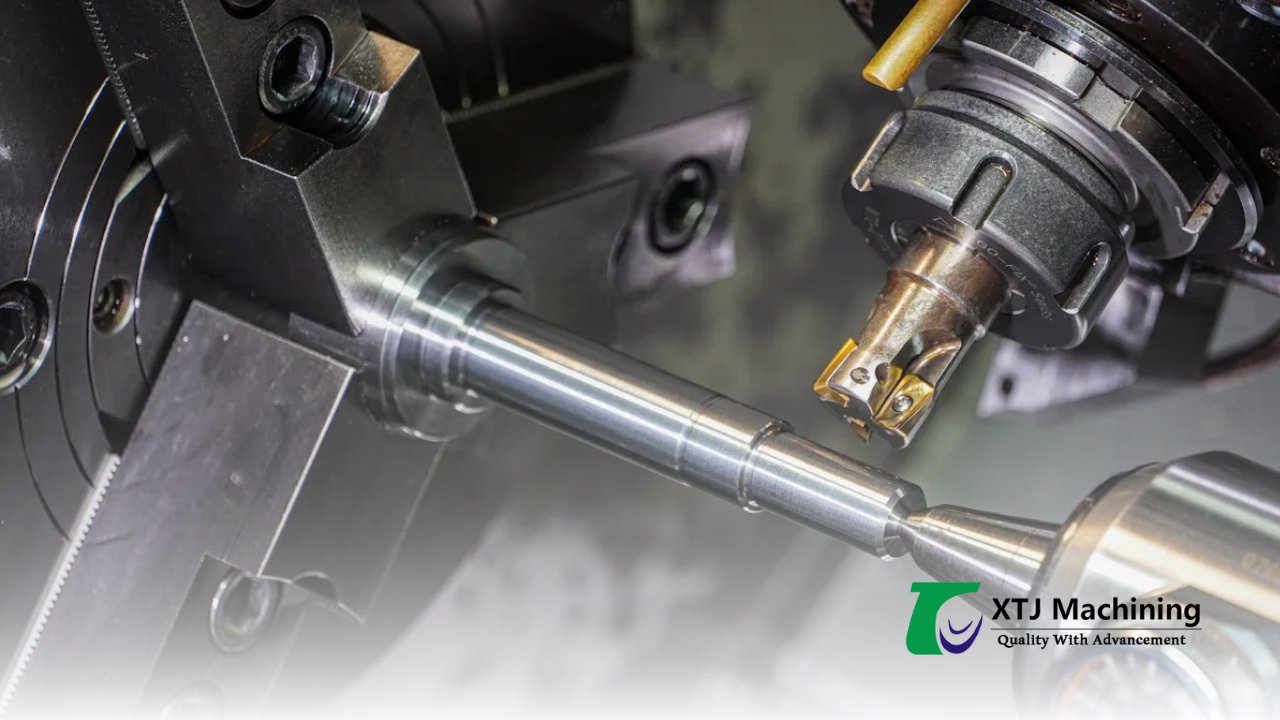
XTJ CNC machines your parts in its own 12,000 m² facility in Dongguan, China, founded in 2005. That direct model removes the middleman markup and keeps quality under one roof. With 120-plus 3 to 5-axis machines and in-house CMM inspection, XTJ CNC holds tolerances as tight as ±0.003 mm and ships prototypes in five days. There’s no minimum order quantity, so you can validate a single part before scaling to a production batch.
XTJ CNC is ISO 9001 and IATF 16949 certified, and its team of roughly 300 supports OEMs including Magna, Shimadzu Medical, BEKO, and Electrolux. That mix of automotive and medical work shows the quality system holds across regulated and high-volume programs.
2026 Highlights
-
Holds tolerances as tight as ±0.003 mm with in-house CMM inspection.
-
Ships functional prototypes in five days, with no MOQ for low-volume runs.
-
Use case: a startup orders one machined enclosure, refines it, then scales to a 2,000-unit batch with the same supplier.
-
Owns its 120-plus machine, 12,000 m² factory, so pricing skips marketplace service fees.
-
ISO 9001 and IATF 16949 certified, with OEM clients in automotive and medical.
XTJ CNC pairs direct-factory pricing with five-day prototyping and tight-tolerance machining. Request a quick quote.
Protolabs
Rapid Prototyping and Production
Protolabs is a US-based on-demand manufacturer known for fast-turn prototypes and low-to-mid-volume production. Its automated quoting and digital workflow move a design from upload to shipped part quickly, which suits teams iterating on a tight schedule. Expect premium pricing in exchange for that speed and digital convenience.
Highlights
-
Fast-turn prototypes in days, not weeks, for time-critical projects.
-
Automated DFM feedback flags manufacturability issues at quote time.
-
Use case: a product team needs a machined bracket revised three times in two weeks before a design freeze.
-
ISO 9001 and ISO 13485 certified for general and medical work.
Protolabs fits teams that value speed and a self-serve digital workflow over the lowest unit price.
Xometry
Scalable Marketplace Network
Xometry runs a marketplace that matches your CNC job to vetted partner shops. Instant quoting and broad capacity make it easy to source a wide range of parts, including overflow when your usual shop is full. Because the work is distributed across third-party suppliers, consistency and pricing can vary between orders.
-
Instant online quotes across a large vetted supplier network.
-
Deep capacity for sudden volume spikes or overflow orders.
-
Use case: a buyer sources a one-off machined fixture fast without onboarding a new shop.
Xometry suits buyers who prioritize capacity and quoting speed and can accept some shop-to-shop variation.
Fictiv
Managed Manufacturing Network
Fictiv coordinates CNC fabrication through a managed network of vetted shops, with real-time order tracking and a focus on transparency. It serves robotics and medical customers that want visibility into each milestone. Third-party coordination can add cost compared with a direct-factory supplier.

-
Real-time tracking gives clear visibility from order to delivery.
-
Use case: a robotics team needs milestone-by-milestone status on a multi-part machined assembly.
-
Lead times depend on network shop availability rather than a single owned plant.
Fictiv fits teams that value process visibility and managed coordination across a distributed network.
3ERP
Precision Prototyping and Low-Volume Production
3ERP is a China-based provider focused on prototyping and low-volume runs for automotive and industrial customers. Its engineering support helps de-risk complex geometries before machining begins. It uses a mix of in-house and partner capacity, so confirm where your specific job will run.
-
Strong engineering support for complex, tight-tolerance prototypes.
-
Use case: an industrial designer needs a complex five-axis prototype reviewed for machinability first.
-
Lead times suit prototype and low-volume work rather than large production batches.
3ERP excels at prototyping where hands-on engineering input matters more than the lowest unit cost.
RapidDirect
On-Demand Custom Manufacturing

RapidDirect is a China-based provider offering CNC machining for custom parts through an online platform with instant quotes and automated DFM feedback. It serves electronics and medical customers and supports metals, plastics, and composites. Some coordination cost can be embedded in the quoted price.
-
Supports metals, plastics, and composites across one platform.
-
Automated DFM feedback at quote time reduces back-and-forth.
-
Use case: an electronics team orders machined heat-sink prototypes, then repeats the order at low volume.
-
ISO 9001 and ISO 14001 certified.
RapidDirect balances quoting speed and material range, with pricing that reflects platform coordination.
Hubs (Protolabs Network)
On-Demand Fabrication Network
Hubs connects buyers with a global network of vetted CNC shops, simplifying ordering and standardizing quality checks. It serves automotive and industrial customers that need broad sourcing reach. As with any network model, coordination can show up in pricing and lead time.
Hubs offers wide sourcing reach, with lead time and price set by the shop matched to your job.
CNC Provider Comparison Table
Use this side-by-side table to shortlist providers fast. Pricing is relative ($ = most competitive, $$$ = premium) and lead times are capability-based, not fixed quotes. Always confirm exact timing and cost for your specific part and volume.
| Provider | Core Strengths | Relative Pricing | Typical Lead Time | Certifications | Best For |
|---|---|---|---|---|---|
| XTJ CNC | Owned factory, ±0.003 mm tolerance, no MOQ, end-to-end finishing | $ | Prototypes in 5 days; scales to production | ISO 9001, IATF 16949 | Prototype-to-production with tight tolerances and direct pricing |
| Protolabs | Fast digital quoting, rapid prototypes | $$$ | Fast-turn, days for many prototypes | ISO 9001, ISO 13485 | Speed-first prototyping and design iteration |
| Xometry | Large marketplace, instant quotes, deep capacity | $$ | Varies by matched shop | ISO 9001 (network) | Overflow capacity and quick sourcing |
| Fictiv | Managed network, real-time tracking | $$$ | Varies by network availability | ISO 9001, ISO 13485 (network) | Process visibility on complex assemblies |
| 3ERP | Engineering support for complex prototypes | $$ | Prototype and low-volume focused | ISO 9001 | Complex, tight-tolerance prototypes |
| RapidDirect | Online quoting, wide material range | $$ | Prototype to low-volume | ISO 9001, ISO 14001 | Multi-material prototype runs |
| Hubs | Global sourcing network | $$ | Varies by matched shop | ISO 9001 (network) | Broad sourcing reach |
One pattern stands out. Owned-factory providers like XTJ CNC control cost and quality directly, while marketplace models trade some consistency for capacity and reach. Match that tradeoff to how much your program values predictable pricing and repeatable quality.
Which CNC Provider Fits Your Industry?
Different industries push on different requirements. Medical work leans on traceability and biocompatible materials. Automotive leans on IATF 16949 and volume consistency. Electronics needs tight tolerances at scale, and general industrial work prioritizes flexible volume and cost. The table below maps each industry to the capabilities that matter most.
| Industry | What Matters Most | Materials and Processes | Provider Profile to Look For |
|---|---|---|---|
| Medical and healthcare | Traceability, biocompatible materials, documented inspection | Stainless steel, titanium, PEEK; CMM inspection, full material traceability | ISO 13485 or strong ISO 9001 with documented inspection records |
| Automotive | Volume consistency, repeatability, part-level traceability | Aluminum, steel; 3 to 5-axis machining, SPC, batch traceability | IATF 16949 certified with proven production capacity |
| Electronics and consumer electronics | Tight tolerances, fine features, surface finish at volume | Aluminum, brass, engineering plastics; precision milling, anodizing | Tight-tolerance milling with reliable finishing in-house |
| General and industrial prototyping | Flexible volume, fast iteration, competitive cost | Aluminum, steel, plastics; rapid prototyping, low-volume runs | No-MOQ provider with fast prototyping and scalable capacity |
Medical and healthcare
Medical buyers care most about traceability and documented quality. Every part needs a clear material history and inspection record so an audit can follow it back to raw stock. A provider with ISO 13485 or a strong ISO 9001 system plus in-house CMM inspection fits best. XTJ CNC’s work for Shimadzu Medical and its full material-to-batch traceability suit components that demand this level of control.
Automotive
Automotive programs reward consistency across thousands of parts. IATF 16949 certification signals a quality system built for repeatable production, not just one-off prototypes. You want batch traceability and statistical process control to keep variation in check. XTJ CNC holds IATF 16949 and machines for Magna, so it understands automotive expectations on repeatability and documentation.
Electronics and consumer electronics
Electronics parts often combine fine features, tight tolerances, and a clean surface finish at meaningful volume. Heat sinks, connector housings, and enclosures all demand precise milling plus reliable anodizing or plating. A provider that machines and finishes under one roof reduces handoffs and protects the finish. XTJ CNC’s in-house finishing and ±0.003 mm capability support this kind of detail work for clients like BEKO and Electrolux.
General and industrial prototyping
General and industrial buyers value flexibility above all. You might need one prototype this week and 500 parts next quarter, without switching suppliers. A no-MOQ provider with fast prototyping and the capacity to scale removes that friction. XTJ CNC’s five-day prototypes and no-MOQ policy let you test a design cheaply, then ramp volume on the same line.
Key Features of CNC Fabrication Leaders
Precision and Quality
Tolerances
Top CNC providers compete on how tightly and how repeatably they hold a dimension. The best shops reach single-digit micron tolerances, and XTJ CNC machines to ±0.003 mm. That precision matters for medical instruments, fluid components, and any part that must fit and seal correctly. Several factors set the achievable tolerance:
- The material, such as aluminum or stainless steel, changes how precisely a feature holds.
- Part geometry matters. Small or complex features call for tighter control.
- Tooling choice and cutting speed shape the final accuracy.
- Machines need regular calibration and care to stay accurate.
- Standards like ISO 2768 or ASME Y14.5 help teams pick the right tolerance class.
Plan tolerances early. A quick DFM review pairs each feature with a sensible tolerance and avoids over-machining.
Material Capabilities
CNC leaders machine a wide material range. They cut metals like steel, titanium, and aluminum, plus plastics, composites, and some ceramics. Each material behaves differently under the tool, so the right shop tunes feeds, speeds, and tooling for each one. That flexibility lets a single provider serve automotive, medical, and electronics work without switching suppliers.
- Strong providers follow documented procedures so every part meets spec.
- Skilled machinists and modern equipment hold quality across material types.
- In-process and final inspection confirm parts meet the drawing.
Automation and AI
Robotics and Lights-Out Machining
Many leading shops use automation to load, unload, and inspect parts. Automated handling lets machines run unattended overnight, which lifts capacity and steadies cost per part. It also reduces handling errors and keeps operators away from repetitive tasks.
- Lights-out machining adds capacity without adding shifts.
- Automated handling cuts variation between parts.
Software and Process Monitoring
Modern shops run on connected software. Digital simulation tests a toolpath virtually before cutting metal, which catches collisions early. Real-time monitoring tracks machine health and flags maintenance before a failure stops a run. These tools protect both accuracy and schedule.
- Simulation reduces scrap by catching errors before machining.
- Condition monitoring keeps machines available and predictable.
Sustainability and Innovation
Eco-Friendly Practices
CNC leaders increasingly track energy and material use. Industry 4.0 tools help shops use resources efficiently, and predictive maintenance extends machine life while trimming energy waste. Near-net-shape stock and optimized toolpaths cut the volume of material that ends up as chips.
- Real-time data reduces scrap and tightens material use.
- Efficient coolant handling lowers chemical consumption.
Customization and Flexibility
Flexible setups let a shop switch between jobs quickly and serve both one-off and batch orders. Advanced machines and smart software make design changes easier to absorb. That flexibility helps a provider support varied industries without long changeovers.
- Quick changeovers let one shop handle prototypes and production.
- Flexible capacity absorbs urgent orders without stalling the schedule.
Customer Support
Support quality separates good providers from frustrating ones. The strongest partners respond fast, communicate clearly, and stay engaged after the parts ship. That responsiveness builds the trust that turns a first order into a long-term relationship.
Communication
Clear communication keeps a project moving. Top providers answer by email, phone, and chat, and they reply quickly when an issue surfaces. Fast answers stop a small question from becoming a missed deadline. A responsive engineering contact also speeds up DFM feedback and quote turnaround.
After-Sales Support
Good support continues after delivery. The best providers help with revisions, re-orders, and any quality questions on shipped parts. They keep documentation and inspection records on file so a repeat order matches the first. That continuity matters most when you scale from prototype to production.
- Fast, clear responses to quotes and technical questions.
- Documentation and inspection records retained for re-orders.
- Engineering support through revisions and scale-up.
CNC Fabrication Pricing Comparison
Pricing Models
CNC providers price work in a few common ways, and each fits a different buyer. Understanding the model helps you compare quotes fairly.
Per-Part
Per-part pricing charges for each unit you order, which suits prototypes and small runs. The price folds in material, machine time, and labor. Use it when you’re validating a design or ordering low quantities.
Project-Based
Project-based pricing sets one figure for the whole job, from design support through delivery. It fits larger or more complex programs where you want cost certainty up front. The provider weighs quantity, material, and timeline to land a single number.
Subscription and Framework Pricing
Some providers offer recurring framework pricing for buyers who order often. You lock in rates and priority capacity across a period. This helps high-frequency buyers plan spend and protect lead times.
Tip: Match the pricing model to your order size, part complexity, and how often you reorder.
Regional cost differences are real. China-based providers often quote lower per-part costs thanks to material and labor economics, while some Western shops charge more for local logistics. The studies summarized below compare these tradeoffs:
| Comparative Study | Focus | Key Cost Factors | Advantages | Tradeoffs |
|---|---|---|---|---|
| Cost of CNC Machining: China vs. USA | Cost comparison across regions | Labor, material cost, logistics | Lower labor and material cost in China | Shipping lead time from China |
| Comparative Analysis: China vs. USA | Cost and cost-reduction levers | Labor and operational expense | Competitive pricing and skilled labor in China | Higher operational cost in the USA |
| Global Comparison: China, Japan, USA, Germany | OEM custom parts and rapid services | Delivery speed, quality, technology | Reliable quality and delivery speed | Cost and technology access vary by region |
Relative Price Ranges 2026
XTJ CNC’s direct manufacturing removes the intermediary fees common on marketplace platforms. The bands below show how cost scales with volume and complexity, expressed as relative ranges rather than fixed quotes.
-
Prototyping (small runs): highest per-part cost, lowest total spend.
-
Low-volume production (100 to 1,000 units): per-part cost drops as setup amortizes.
-
High-volume production (1,000+ units): lowest per-part cost.
-
Complex parts: tight tolerances and hard-to-machine materials raise cost at any volume.
Cost Factors
Several factors drive the final price. Providers weigh material, part complexity, and how fast you need delivery.
Materials
Material is a large share of part cost. Aluminum is affordable and easy to cut, while titanium costs more and machines slowly. Material grade also moves the price, and high-grade aluminum can run well above standard grades. Market supply and cutting waste both factor in too.
| Material | Relative Cost | Machinability | Typical Applications |
|---|---|---|---|
| Aluminum | Low | Excellent | Prototypes, electronics enclosures |
| Brass | Moderate | Very good | Electrical components, decorative parts |
| Carbon steel | Moderate | Good | Structural components, tooling |
| Stainless steel | High | Moderate | Medical devices, food-grade equipment |
| Titanium | Very high | Poor | Medical implants, demanding components |
Complexity
Complex parts cost more. Intricate geometries need more machine time and specialized setups, and they may call for 5-axis machining. Complex jobs also lean on skilled machinists and careful planning. Each added operation and inspection step raises the price.
- Intricate parts take longer to machine.
- Multi-axis machines may be required.
- Extra operations like turning or finishing add cost.
- Demanding programming and setup take more time.
- Added inspection steps protect quality but raise cost.
Lead Time
Lead time reflects how fast a provider can deliver. Rush work usually costs more because it may require overtime or extra machine allocation. Planning ahead keeps cost down, and an owned-factory model like XTJ CNC’s reduces rush premiums by controlling its own capacity.
Note: Expedited orders typically carry a premium. In-house production helps minimize rush fees because the provider controls the schedule directly.
Value for Money
Buyers want the most capability per dollar, and 2026 technology helps deliver it. The points below explain where the value comes from:
- The CNC services market keeps growing, projected at around 6.1% annually through 2030, which expands capacity and competition.
- Connected monitoring catches machine issues early, so fewer failures interrupt your run.
- Digital simulation lets engineers validate a design virtually, cutting scrap and setup time.
- Multi-axis machining finishes complex parts in fewer setups, raising throughput.
- Process software reduces scrap and rework, so you pay for fewer wasted parts.
Market data is drawn from distributors, suppliers, and industry groups, then cross-checked by analysts. That diligence helps you trust the cost benchmarks you compare against.
Tip: Favor providers with modern equipment and strong references. They usually deliver the best value over a full program.
Comparing providers side by side shows who offers the best mix of price, quality, and service. Shops with current machines and software tend to quote better and deliver faster. That makes CNC fabrication a practical choice for many programs in 2026.
Choosing a CNC Fabrication Partner
Assessing Needs
Industry Requirements
Each industry asks something specific from a CNC partner. Medical device makers need documented inspection and traceable materials. Automotive and industrial buyers want parts they can trust and track across batches. XTJ CNC’s direct model and full traceability support these expectations.
The table below shows which capabilities matter and why:
| Capability | Benefit | Why It Matters |
|---|---|---|
| Near-net-shape stock | Uses less raw material | Lowers waste and material cost |
| Optimized toolpaths | Better material utilization | Improves yield and reduces scrap |
| Tight tolerance capability | Holds critical dimensions | Required for precision-fit components |
| CMM inspection | Verifies part size and form | Confirms parts match the drawing |
| Statistical process control | Monitors the process in real time | Keeps variation low across a batch |
| First article inspection | Validates the first parts | Confirms quality before a full run |
| Workforce training | Builds machinist skill | Sustains quality on complex jobs |
Check whether a provider’s team is trained and works well together. Strong partners track materials, fix issues fast, and welcome feedback to improve.
Volume and Scale
Your order size shapes which partner fits. Small jobs suit flexible 3 to 5-axis machines, while large runs need capacity built for speed and cost. Material choice affects both price and timing, since titanium machines slower than aluminum. Complex designs and tight specs add inspection time. A provider with no MOQ lets you start small and scale on the same line.
- Medical work needs safe materials and careful testing.
- Automotive and industrial buyers want every part tracked.
- Electronics needs tight tolerances and clean finishes.
- Extra steps like coating or plating add cost and value.
A capable partner handles all of these and holds quality across volumes.
Evaluating Companies
Reputation
Reputation carries weight when choosing a partner. Providers with proven quality, on-time delivery, and fair pricing stand out. Studies note that most manufacturers rank quality first when selecting suppliers, and supplier delays remain common. Price matters, but not at the expense of quality. The table below shows what builds a strong reputation:
| Reputation Metric | Description | Why It Matters |
|---|---|---|
| Quality assurance | How the provider verifies quality | Most buyers rank quality as the top factor |
| Delivery performance | On-time delivery record | Supplier delays disrupt downstream schedules |
| Cost-effectiveness | Total cost, including rework | Cheap parts cost more if they fail inspection |
Certifications
Certifications show a provider follows recognized standards. ISO 9001 covers general quality management. IATF 16949 targets automotive production, and ISO 13485 covers medical devices. ISO 45001 addresses workplace safety. Each requires audits, training, and strict procedures. XTJ CNC’s ISO 9001 and IATF 16949 certifications, plus in-house inspection tools, build buyer confidence.
| Certification | Industry Focus | Key Benefit |
|---|---|---|
| ISO 9001 | General quality management | Global standard with continual improvement |
| IATF 16949 | Automotive production | Adds automotive-grade quality and traceability |
| ISO 13485 | Medical devices | Focuses on medical device quality and compliance |
| ISO 45001 | Health and safety | Shows commitment to a safe workplace |
Why XTJ CNC
Unique Advantages
XTJ CNC stands out because we own and run our own factory. From our floor straight to your dock, there’s no middleman margin folded into the quote. Many online manufacturing platforms integrate third-party shop resources to fill orders, which adds a service fee even when the bill hides it. We control the whole process and the quality that comes with it.
We’ve operated since 2005, and our roughly 300 trained staff support OEMs like Magna, Shimadzu Medical, BEKO, and Electrolux. Our support team resolves issues fast, which keeps your schedule intact. Customers return because the quality and service hold up from a single prototype through full production.
Tip: Always ask for references and review past work before you commit to a supplier.
CNC fabrication keeps advancing in 2026. Providers use connected sensors and smart software to monitor machines and tighten accuracy. Efficient designs and flexible capacity help meet changing demand. Match a provider to your project and you protect both quality and schedule. XTJ CNC pairs five-day prototyping, no MOQ, and tight-tolerance machining with direct-factory pricing. Request a quote to start the conversation.
FAQ
What does CNC stand for?
CNC means Computer Numerical Control. A computer directs the machine’s movements, which lets a provider make precise parts that repeat the same way every time.
Should I use a direct manufacturer or a marketplace platform?
A direct manufacturer like XTJ CNC machines your parts in its own factory, so pricing skips marketplace service fees and quality stays under one roof. A marketplace gives you broad capacity and fast quoting but distributes work across shops. Choose direct for consistency and cost, and a marketplace for overflow or one-off sourcing.
What is the lead time for a CNC prototype?
Lead time depends on part complexity, material, and finishing. Many providers turn straightforward prototypes around in days, and XTJ CNC ships prototypes in five days. Confirm timing for your specific part, since tight tolerances and special finishes can extend it.
Do CNC providers require a minimum order quantity?
It varies. Some shops set a minimum, while XTJ CNC has no MOQ, so you can order a single prototype and scale later. A no-MOQ policy lowers the risk of trying a new supplier before committing to volume.
How do I keep CNC machining costs down?
Choose machinable materials where the application allows, avoid over-tight tolerances on non-critical features, and plan ahead to skip rush premiums. A DFM review often surfaces small design changes that cut cost without hurting function.
Which certifications should I look for?
Match the certification to your industry. ISO 9001 covers general quality, IATF 16949 suits automotive production, and ISO 13485 fits medical devices. These signal a provider can hold quality across runs and back it with documentation.